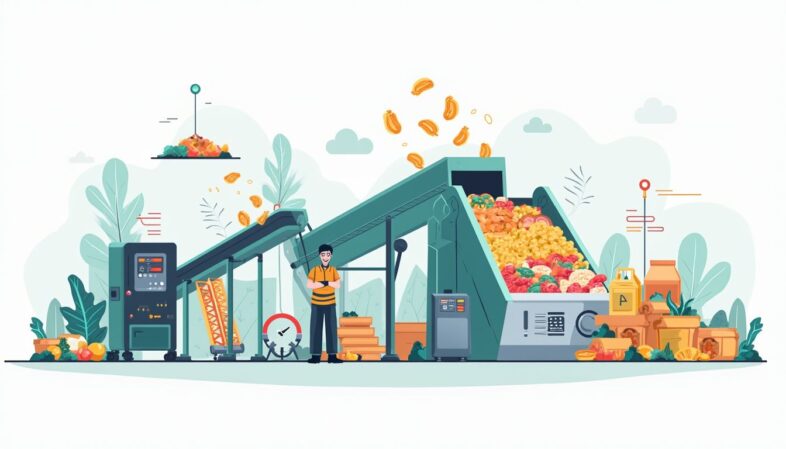
Advanced sorting technology in the waste sector is transforming waste management from a manual, error-prone process into an automated, high-precision operation. By leveraging AI, robotics, and advanced sensors, these technologies can identify, sort, and recover materials with up to 99.9% accuracy.
If used consistently throughout the advanced waste sector/ advanced sorting technology industry, it will transform waste management from a manual, error-prone process into an automated, high-precision operation. By leveraging AI, robotics, and advanced sensors, these technologies can identify, sort, and recover materials with up to 99.9% accuracy, significantly increasing recycling rates and supporting circular economy models industry, this will significantly increase recycling rates and support circular economy models.
If you manage a waste processing facility, you face a tough challenge every day.
Your recycling targets are rising, but the food waste keeps coming. In the UK alone, around 9.5 million tonnes of food waste are generated each year, producing 25 million tonnes of CO2-equivalent emissions. That is the same as 3.5 million cars on the road.
The pressure to cut these numbers is real. From 31 March 2026, all English local authorities must offer separate weekly food waste collections to households, and your facilities need to be ready.
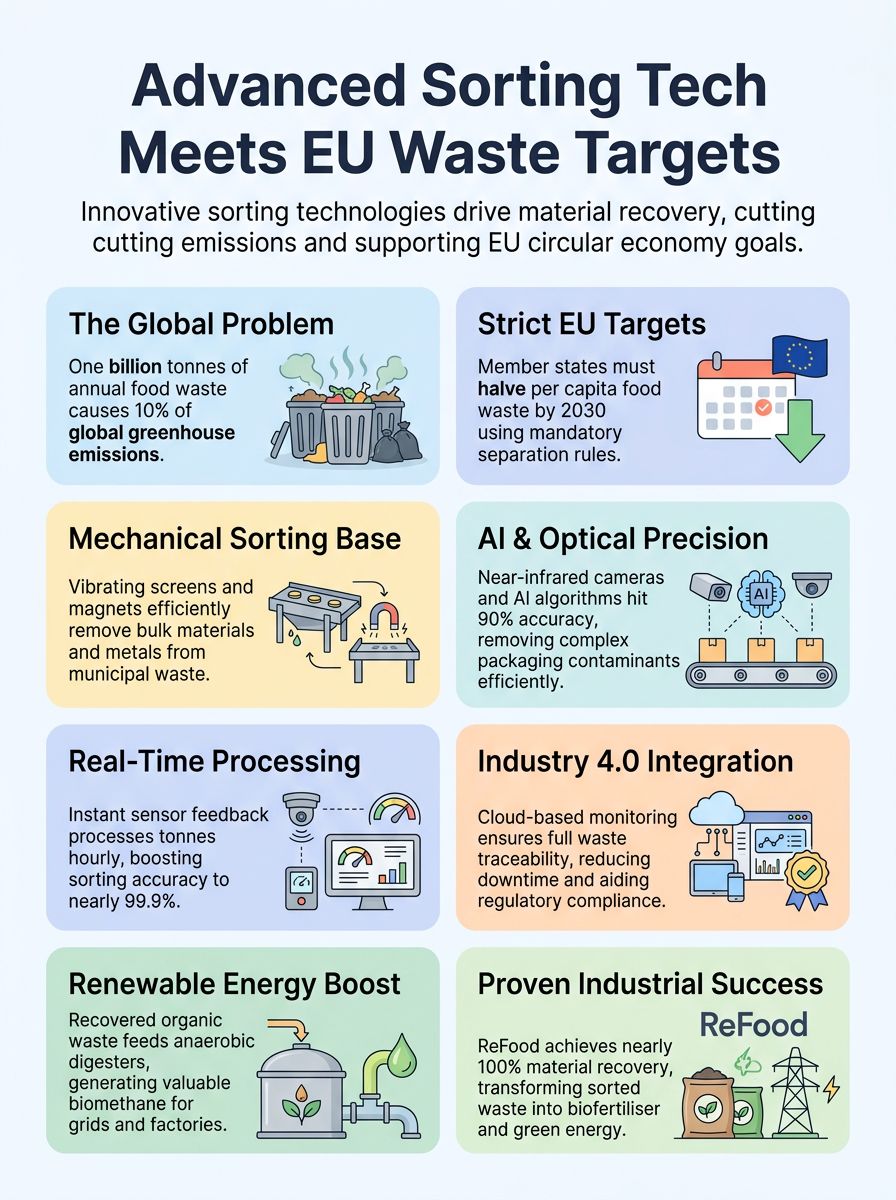
Over one billion tonnes of food waste are produced globally each year, causing up to 10% of worldwide greenhouse gas emissions. 1 The solution lies in smarter sorting. Advanced sorting technologies like sensor-based colour sorters, magnetic separators, and AI-driven networks can help you recover materials faster and more accurately than ever before. This article shows how these systems work, which UK facilities are already leading the way, and how you can use them to meet EU goals for lower emissions by 2030. 2 Discover how upgrading your waste segregation process delivers real results for your operation and the environment. 3
Key Takeaways – Advanced Sorting Technology
- The EU requires all member states to enforce separate food waste collection by 2024 and reduce per capita food waste by 50% before 2030.
- Advanced sorting technologies like AI-driven sorters, vibrating screens, and magnetic separators boost material recovery rates up to nearly 100%.
- Food waste contributes up to 10% of global greenhouse gas emissions, making improved segregation essential for achieving net zero targets. 1
- Facilities such as ReFood use real-time sensor systems with Industry 4.0 integration to maximise renewable energy production from food waste via anaerobic digestion.
- Policy compliance relies on digital reporting and frequent audits. Strict monitoring ensures sorted streams support circular economy goals and emission reductions across the EU.
Role of Advanced Sorting Technologies in Food Waste Management
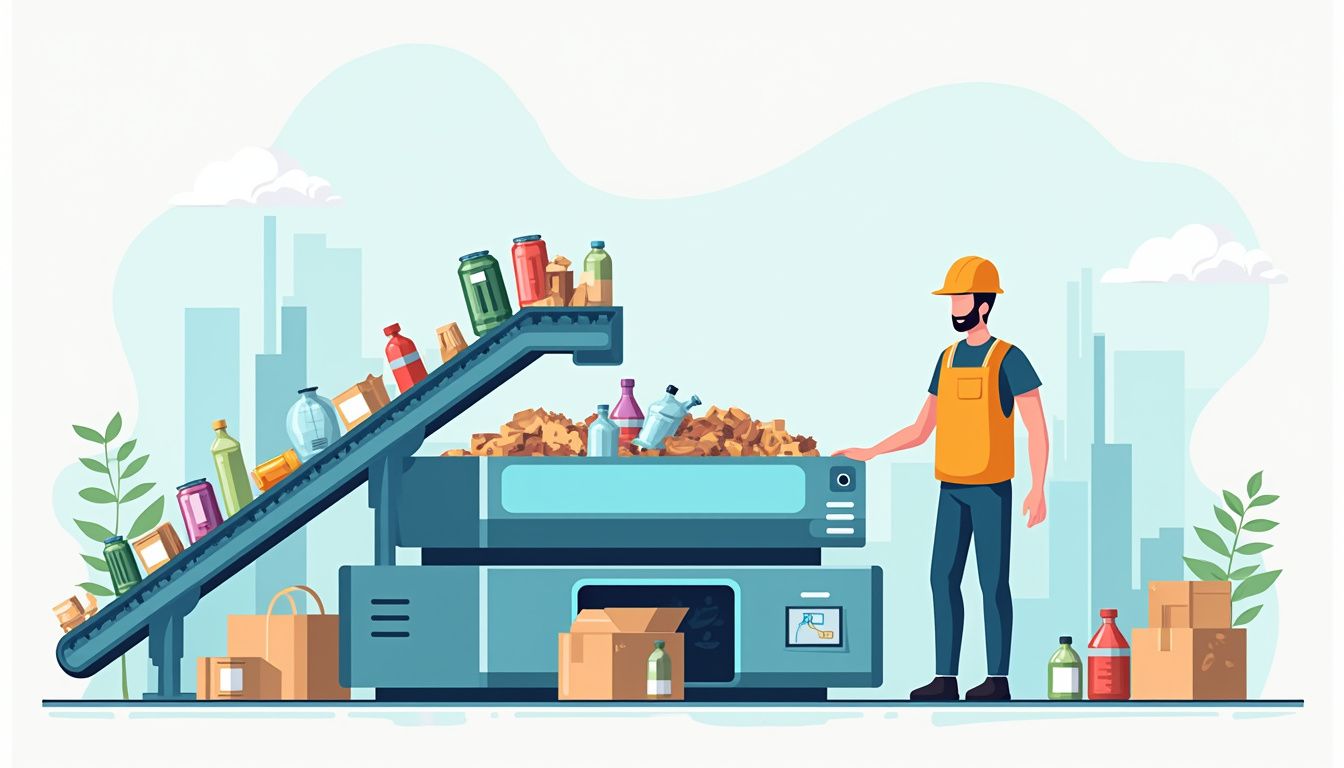
Advanced sorting technologies now drive the shift from landfill reliance to resource recovery.
You can recover recyclable materials from mixed waste using optical sorters, vibrating screens, and magnetic separators. These automated systems improve material recovery rates and support a circular economy by reducing residual waste sent for incineration or landfill.
How does food waste contribute to global greenhouse gas emissions?
Rotting food waste in landfill emits methane, a potent greenhouse gas with over 80 times the warming power of carbon dioxide in the first two decades after release.
Globally, more than one billion tonnes of food scraps and packaging waste are disposed of every year. 1 This discarded material is responsible for 8 to 10 percent of all worldwide greenhouse gas emissions.
In the UK, food waste alone generates approximately 25 million tonnes of CO2 emissions annually. UK households throw away 4.4 million tonnes of edible food each year. That equals 16 million tonnes of greenhouse gas emissions from UK homes alone.
Dumped household waste and mixed municipal solid waste often escape proper sorting processes. These organic wastes add significant pressure on incinerators or landfills instead of entering anaerobic digestion facilities that recover energy and reduce climate impact. The UK recycling rate for waste from households reached 44.6% in 2023, but Wales leads with a 57% recycling rate, showing what is possible with better infrastructure.
Why are advanced sorting technologies crucial for the EU's food waste reduction goals?
Advanced sorting technologies play a vital role in helping the EU achieve its food waste reduction targets.
Under the EU's mandatory policy, which started in 2024, member states must cut per capita food waste by 50% by 2030. 1 This aligns with Sustainable Development Goal 12.3 and calls for precise separation of municipal solid waste from households and businesses.
Tools like colour sorters, x-ray fluorescence devices, vibrating screens, magnetic separators, and optical sorting equipment can process several tonnes per hour with high accuracy. AI-based systems now reach over 90% sorting precision while real-time processing pushes material recovery rates to almost 99.9%. These advances keep recyclables out of landfill or incineration plants.
High-quality input increases yields for renewable energy production, such as biogas, while supporting circular economy goals throughout the sector. TOMRA's AUTOSORT system is one example. Its NIR technology separates materials with high precision, reducing contamination in recycling streams.
Advanced sorting is at the core of decarbonisation strategies in Europe. It ensures that recyclable materials do not end up as garbage but return into productive use.
Mandatory Food Waste Sorting Policy in the EU
EU member states must now enforce strict food waste sorting rules to boost recycling rates and material recovery.
These environmental policy changes aim to cut carbon emissions by reducing the amount of municipal solid waste that is incinerated or sent for disposal. In England, the Simpler Recycling initiative requires local authorities to collect the same core materials, including glass, metal, plastic, paper, and cardboard, from 31 March 2026.
What are the EU requirements and targets for member states on food waste sorting?
The EU introduced strict food waste sorting rules in 2024, aiming to cut greenhouse gas emissions and drive the circular economy.
Member states face clear targets and compliance measures to meet these ambitions:
- All member states must enforce the mandatory separation of food waste from other municipal solid waste streams starting in 2024. 1
- Each state must reduce per capita food waste by 50 per cent before 2030, reflecting UN Sustainable Development Goal 12.3 commitments.
- Authorities require effective traceability and monitoring of sorted waste materials through reporting systems to improve transparency and track progress.
- Local governments must integrate advanced sorting technologies like mechanical separators, optical sorters, sensors, and AI-based systems within their recycling infrastructure.
- Food waste collected needs proper treatment via processes such as anaerobic digestion or material recovery instead of simple landfill disposal or incineration.
- The policy framework obliges facilities to increase recycling rates by optimising system performance using innovations like vibrating screens, magnetic separators, and colour sorters.
- Member states have to ensure public awareness campaigns promote the correct disposal of food scraps into designated bins for effective collection at source.
- Monitoring authorities may use satellite data and digital tools for compliance checks on municipal food waste management efforts across regions.
- Implementation includes frequent audits to ensure that carbon reductions from improved food waste sorting contribute reliably to net zero emissions strategies under environmental policy goals.
Advanced Sorting Technologies for Food Waste Management
Advanced sorting technologies such as vibrating screens, magnetic separators, and artificial intelligence systems now drive faster material recovery and smarter food waste recycling.
Read on to see how these tools improve environmental impact and support circular economy goals. The use of advanced sorting technology will be vital, including the best depackaging and separation technology from companies such as Drycake with their Twister depackaging system.
What are mechanical sorting systems?
Mechanical sorting systems form the backbone of food waste recycling operations.
Shredders reduce bulk waste into manageable fragments, preparing materials for downstream processing. Vibrating screens then separate items based on size, sending larger particles for further treatment while allowing smaller pieces to pass through quickly.
Magnetic separators remove metallic contaminants from food waste streams by attracting ferrous objects with strong magnets. 1 Trommel screens often join these systems to enhance material recovery and streamline initial separation processes.
These technologies typically handle the first stage in municipal solid waste (MSW) facilities. They offer a cost-effective solution for high-volume environments. Mechanical units excel at bulk sorting but struggle with lightweight plastics or complex layers such as multi-film plastic packaging, which decreases their sorting accuracy compared to sensor-based or AI-driven solutions. 2
Mechanical separation remains essential yet limited in achieving high-purity recovered materials.
Most facilities rely on mechanical methods for efficient throughput and baseline contaminant removal. They face constraints in handling intricate contaminant mixes commonly present within modern food packaging streams. This approach suits operators aiming for rapid preliminary disposal of waste before fine-tuned advanced sorting steps begin.
How do optical and sensor-based systems work in food waste sorting?
Optical and sensor-based systems use near-infrared spectroscopy to identify materials in food waste streams.
High-resolution cameras scan each item, detecting organics, plastics, and contaminants with greater accuracy than vibrating screens or magnetic separators. These technologies rely on sensors that analyse spectral lines from reflected light to sort waste based on chemical composition.
Major manufacturers like TOMRA, Pellenc ST, and Steinert GmbH lead the market in optical sorting technology. TOMRA's flagship AUTOSORT uses deep learning and NIR to separate materials with high precision. Pellenc ST's Mistral+ includes advanced BOREAS control software that provides real-time analytics on material composition.
Systems running at high throughput rates remove plastic packaging and other unwanted items efficiently. Colour sorters spot various plastics, metal fragments, or glass mixed in food waste bins. By cutting contamination levels so sharply, these systems help facilities comply with strict EU regulatory standards for material recovery and recycling rates set for 2024 targets.
Laser-induced breakdown spectroscopy (LIBS) also plays a role by pinpointing hidden contaminants missed by traditional methods or lower-grade sensors. X-ray irradiation enhances this process by providing detailed data for sorting.
What advantages do AI-based sorting systems offer?
AI-based sorting systems use deep learning algorithms to classify food waste with remarkable accuracy.
They consistently achieve over 90 percent correct identification. 3 These automated technologies can handle complex contaminants that traditional mechanical or optical sorters often miss, leading to higher material recovery and better quality outputs.
Machine learning systems can analyse thousands of images per minute. They identify and segregate materials with a level of precision that was previously unimaginable. UK firms like Sorted and Greyparrot provide AI-powered sorting solutions. Greyparrot's Analyzer platform unlocks data on 99% of waste flowing in a facility, while manual sampling covers only 1%.
Continuous learning allows these systems to get smarter over time. They adapt instantly to changes in the food waste stream, which improves system optimisation and efficiency. Automated AI platforms reduce manual labour requirements and lower operational costs for recycling industry operators. 3
Meeting tight EU food waste reduction targets becomes more achievable as AI-driven solutions keep pace with evolving environmental goals and stricter governance measures on emissions trading across member states.

How do real-time processing systems improve food waste management?
Real-time processing systems use advanced sensors such as x-ray radiation, colour sorters, and laser-induced breakdown spectroscopy to instantly identify contaminants in food waste streams.
This instant detection boosts sorting accuracy up to 99.9 percent while handling several tonnes of material per hour. 1 Dynamic system responses adjust settings on the fly as waste conditions change. This reduces downtime and supports rapid scaling at industrial facilities.
Automated feedback from these systems gives operators clear data about throughput and contamination levels. Real-time reporting increases transparency for managers overseeing material recovery processes or integrating with Industry 4.0 infrastructure. These improvements help boost recycling rates, improve energy from waste outcomes, and support compliance with EU environmental standards on food waste emissions reduction targets. 1
How are sorting technologies integrated with Industry 4.0 infrastructure?
Sorting technologies now link directly with Industry 4.0 infrastructure through cloud-based monitoring and advanced data analytics. 1
Optical sorters, magnetic separators, and AI-driven sensors share performance statistics in real time to central control systems. This approach supports remote access to system health, reduces downtime through predictive maintenance, and enables fast response if technical issues arise.
Waste streams gain full traceability throughout each processing cycle because material information travels with the waste from vibrating screens to plastic packaging separation units. Automated reports facilitate compliance checks for regulatory bodies across EU member states.
Data-driven process optimisation improves decision-making and efficiency at every stage of food waste management. Secure communication between sorting equipment allows every device, from X-ray scanners to colour sorters, to work together seamlessly under one digital dashboard.
Case Study: ReFood's Industrial Application of Sorting Technologies
ReFood uses vibrating screens, magnetic separation, and AI-based colour sorters to achieve high material recovery and support the circular economy.
Discover how their advanced sorting technologies set a standard in food waste management.
How does anaerobic digestion work at ReFood's facilities?
ReFood operates three state-of-the-art anaerobic digestion plants in the UK at Doncaster, Widnes, and Dagenham.
At these facilities, staff use advanced sorting technologies to separate packaging from food waste before processing. The Widnes plant processes up to 160,000 tonnes per year. Sites run dual lines for packaged and unpackaged input.
Vibrating screens and magnetic separators remove plastics and metals while optical sensors sort remaining materials. These systems allow material recovery rates close to 100 percent. 4
Anaerobic digesters then break down organic waste without oxygen. This process generates renewable energy in the form of biogas, which operators refine into biomethane for grid injection or vehicle fuel. The Doncaster plant generates enough electricity to power 10,000 homes per year.
The system also creates nutrient-rich biofertiliser that supports local agriculture and reduces reliance on chemical alternatives. Each step integrates with Industry 4.0 infrastructure for real-time monitoring and process optimisation, maximising both recycling rates and environmental impact reduction within a circular economy model.

What are the material recovery rates and outcomes of transforming food waste?
ReFood achieves nearly 100% material recovery rates at its industrial facilities.
This sets a leading standard in food waste management across the EU. Advanced sorting technologies, such as colour sorters and real-time sensor-based systems, separate waste materials from contaminants like plastic packaging and metals before processing.
Anaerobic digestion transforms separated food waste into renewable energy, mainly biomethane, helping reduce greenhouse gas emissions. The London facility at Dagenham can supply renewable energy to around 10,000 homes. Biofertiliser is another important outcome of this process. It returns vital nutrients to agricultural soils.
High recycling rates support the circular economy by keeping resources in use for longer and minimising landfill disposal. Each tonne of processed food waste supports system optimisation across the value chain while aligning with EU targets on resource efficiency and environmental impact reduction.
This approach proves scalable for industrial-level valorisation of organic streams while demonstrating efficient carbon capture through advanced technologies like vibrating screens and magnetic separators. 5
Impact of Advanced Sorting Technologies on Renewable Energy
Advanced sorting technologies boost material recovery and support the use of biogas.
They help waste management facilities supply more renewable energy. Read on to discover how these innovations accelerate progress.
How do tax credits support biomass electricity generation in the US?
Biomass electricity generators across the United States now access two technology-neutral tax credits, introduced under the Inflation Reduction Act.
The Clean Electricity Production Credit (Section 45Y) and Clean Electricity Investment Credit (Section 48E) apply to a broad range of renewable generation methods, including biomass and biogas projects using advanced sorting technologies. Both credits offer strong financial incentives for investing in low-carbon electricity infrastructure.
KPMG analysis highlights significant potential benefits as these measures boost bankability and investor confidence. 6 Waste management professionals see this support driving wider adoption of circular economy models involving waste sorting and anaerobic digestion.
Higher recycling rates become achievable as facilities upgrade with optical systems, vibrating screens, and other innovations linked to Industry 4.0 infrastructure. These tax credits encourage new project development and also help current sites enhance system optimisation for material recovery while reducing emissions from food waste incineration.
What is the biogas developer's payment extension and its significance?
Northern Biogas, based in West Virginia, secured an extension to complete a $10 million payment, around £7.9 million, to the solid waste district in New Hampshire.
The revised deadline of 1 January 2028 allows Northern Biogas more time to progress its landfill gas-to-energy project at Mt Carberry landfill. This facility aims to turn landfill gas into renewable energy using advanced sorting technologies and anaerobic digestion. 2
The extension highlights both the complexity and scale of biogas infrastructure projects. It enables ongoing development while ensuring that rights for construction and operation remain valid for Northern Biogas. By supporting this local renewable energy initiative, the agreement helps advance EU-style emissions reduction targets and enhances material recovery from waste streams with modern system optimisation techniques.
Recent Developments in Biomethane and Biogas Industry
Biomethane exports to the EU are increasing.
New financing deals drive more biogas plant conversions and support European factories as they shift to renewable energy. Read on for key insights.
How is biomethane exported to the EU?
A fourth Ukrainian company now exports biomethane to the European Union, showing strong progress in cross-border renewable gas trade.
Producers generate this green fuel from sources like food waste and manure, supporting circular economy goals and material recovery. 1 Transmission systems compress and inject this processed gas into pipelines that connect Ukraine with EU countries.
Guarantee of Origin certificates verify the source through electronic tracking, enabling buyers across Europe to confirm sustainability claims. Supplies help the EU meet its renewable energy targets while reducing reliance on a single supplier for natural gas.
Each shipment supports greenhouse gas reduction by displacing fossil fuels within national grids. Recent export activity strengthens Ukraine's position as a reliable player in Europe's decarbonisation strategy. With growing financing deals and increased regulatory approvals, exported biomethane plays a crucial role in advancing carbon capture efforts and system optimisation across member states.
What recent financing deals support biogas projects?
Several significant financing deals now support the expansion of biogas infrastructure across Europe.
These agreements drive innovation in advanced sorting technologies and boost material recovery rates for food waste management.
- Polish banks recently signed a financing deal worth €17.4 million to expand biogas projects, supporting more efficient anaerobic digestion and improved recycling rates.
- This investment targets upgrades in mechanical sorting systems, such as vibrating screens and magnetic separators, raising environmental standards at multiple facilities.
- Ireland has allocated €2.6 million to five research teams working on renewable gas production, including AI-powered digital twins and biomethane from macroalgae, aiding system optimisation in waste sorting.
- Funding supports the integration of optical sensors, colour sorters, and laser-induced breakdown spectroscopy to maximise separation accuracy and resource recovery from food waste streams.
- Financial support is delivered in phased stages to ensure successful research implementation before scaling up new biotechnologies within circular economy frameworks.
- The influx of capital accelerates deployments of innovative biomethane solutions, advancing European goals for carbon capture and storage along with improvements in renewable energy production.
- Growing investor involvement signals a strong shift towards environmentally friendly approaches, enhancing electronic waste recycling efficiency alongside traditional biogas plant operations.
How are biogas plant conversions being approved?
Biogas plant conversions play a major role in strengthening the circular economy by turning waste materials into green energy.
Approval processes for these conversions rely on strict environmental standards and the integration of advanced sorting technologies.
- National and local regulators require comprehensive assessments of each biogas plant's environmental impact, focusing on emissions and waste sorting methods. 7
- Plant conversions must demonstrate system optimisation, including integration of vibrating screens, magnetic separators, and real-time processing systems to maximise material recovery from food waste.
- Authorities ensure that technology upgrades, such as installing optical sorters, metal detectors, or laser-induced breakdown spectroscopy, meet EU recycling rates and emission reduction targets.
- Specific approvals cover the use of new organic feedstocks. For example, the Brackley facility in England received permission to process chicken waste alongside existing inputs.
- Regulatory bodies review compliance with carbon capture and storage (CCS) guidelines and evaluate how Industry 4.0 infrastructure enhances monitoring of food waste transformation.
- Approvals consider regional renewable energy strategies. GreenValue GmbH recently supported Balance Erneuerbare Energien in acquiring a portfolio with a combined thermal input capacity of 46 MW across Saxony, Saxony-Anhalt, and Mecklenburg-Western Pomerania.
- Approval documents verify that plant modifications reduce dependency on incineration of waste by increasing reusing rates through improved sorting and anaerobic digestion technology.
- The regulatory process encourages adoption of AI-based colour sorters to separate plastic packaging from organic material before conversion, supporting higher recycling rates while limiting unnecessary data collection on digital plant monitoring platforms.
- Final authorisation requires proof that all upgraded facilities comply with UK ETS standards for emissions trading and support sustainable biomass electricity generation pathways in line with EU export goals.
How are European factories transitioning to renewable energy?
European factories are adopting renewable energy to meet stricter emissions standards.
This shift helps industries align with EU sustainability goals and cut greenhouse gas output.
- Mars switched all its European production sites to operate solely on biomethane, showing a large-scale move towards renewable gas for manufacturing.
- Companies connect to Industry 4.0 infrastructure, using advanced monitoring systems to optimise boilers and maximise the use of clean energy sources.
- Factory operators invest in anaerobic digestion to convert food waste into biogas. This supports circular economy targets and increases the material recovery rate.
- Firms replace traditional fossil fuels with renewable natural gas, which allows compliance with recent EU directives on sustainable factory operations.
- Larger manufacturers prioritise system optimisation for energy savings through real-time processing systems and AI-based control, boosting recycling rates within facilities.
- The transition helps companies like Mars meet corporate decarbonisation targets while significantly reducing their environmental impact from plastic packaging and other waste materials.
- Factories often use smart sensors, vibrating screens, and magnetic separators within their material handling lines to improve waste sorting before converting it into energy sources like biogas.
- Tax credits in countries such as the US encourage factories to expand biomass electricity generation capacities using sorted organic waste streams.
- Site managers select colour sorters, lasers, x-rays, and web-based tracking to monitor feedstock quality for better integration of renewable input sources.
- These measures support scalable adoption of renewable gas across industrial plants, pushing more sectors to net zero emissions by leveraging innovative technologies in waste management and advanced sorting technology based recycling.
Challenges and Support in Renewable Gas Production
Research funding in Ireland helps advance the application of advanced sorting technologies and system optimisation for renewable gas production.
Increasing recycling rates supports new ways to integrate mechanical separators, inductance coils, and material recovery into sustainable energy solutions.
What research funding supports renewable gas production in Ireland?
Gas Networks Ireland and Research Ireland support five research teams with a combined budget of €2.6 million for renewable gas production.
The programme funds innovation in biomethane from macroalgae, as well as the development of AI-powered digital twins to improve gas management and system optimisation. 8 Researchers move through three funding phases: Concept (€50,000), Seed (€150,000), and Prize with awards up to €1 million.
Funding falls under a regulatory allowance granted by the Commission for Regulation of Utilities (CRU). Open days at Advanced Sorting Technology Centres encourage hands-on engagement between STEM professionals and industry experts, driving new solutions in material recovery, biogas infrastructure, and low-carbon energy transition across Ireland.
Advanced Sorting Technology – Conclusion
Advanced sorting technologies are transforming food waste management in the EU.
Mechanical systems, sensor-based sorters, and AI-driven machines work together to deliver higher recycling rates and boost material recovery. Facilities like ReFood use these solutions with great effect, cutting greenhouse gas emissions while turning waste into renewable energy through anaerobic digestion.
The UK reached a 44.6% household recycling rate in 2023, but targets of 65% by 2035 demand more investment. The integration of such technology supports both economic growth and strong environmental impact goals set by the EU. With continued investment and upgrades, these tools will play a central role in reaching future emission reduction targets.
FAQs
1. How do advanced sorting technologies help reduce food waste emissions in the EU?
Advanced sorting technologies improve material recovery by separating food waste from plastic packaging more efficiently than manual methods. These systems use vibrating screens, magnetic separators, and optical sensors to boost recycling rates and divert organic matter from landfills across the UK and Europe. Better waste sorting feeds pure organics into anaerobic digestion processes to generate renewable energy and strengthen the circular economy.
2. What role do colour sorters play in waste management?
Colour sorters identify and separate different types of waste materials based on their specific visual properties to achieve up to 98 percent purity in processing streams. This optical technology helps material recovery facilities process food waste far more accurately while swiftly removing harmful contaminants.
3. Can laser-induced breakdown spectroscopy improve recycling outcomes?
Yes, laser-induced breakdown spectroscopy (LIBS) analyses atoms by measuring photons emitted from materials to determine their exact chemical composition. This highly precise method identifies complex substances instantly, which enables better system optimisation for waste facilities dealing with mixed alloys and plastics.
4. How does improved waste sorting benefit the environmental impact of food systems?
Enhanced waste sorting directly lowers the environmental impact of food systems by providing cleaner feedstock to anaerobic digestion plants, which stops landfill methane emissions and creates sustainable fertiliser.
5. Is Advanced Sorting Technology used in other industries besides waste management?
These systems serve multiple sectors, including the global diamond industry where X-ray transmission guarantees precise material detection. Satellites also employ similar optical sensor systems to capture photons for Earth observation and geological mapping.
References for Advanced Sorting Technology
- ^ https://www.bioenergy-news.com/news/advanced-sorting-technologies-key-to-meeting-eu-food-waste-targets/
- ^ https://www.ieabioenergy.com/wp-content/uploads/2026/02/2026_IEA-BIO_T36_Advanced-Sorting-technologies_Food-Waste-Germany.pdf
- ^ https://www.researchgate.net/publication/394635955_Leveraging_Artificial_Intelligence_for_Efficient_Waste_Management_in_Smart_Cities
- ^ https://www.theia.global/article/iea-report-highlights-sorting-technologies-to-meet-eu-food-waste-reduction-targets-7aee8ed0
- ^ https://www.ieabioenergy.com/blog/publications/advanced-sorting-technologies-focus-food-waste/
- ^ https://www.bioenergy-news.com/news/us-bill-proposes-tax-credit-to-advance-biomass-carbon-removal-and-storage/
- ^ https://www.sciencedirect.com/science/article/pii/S2211715624002455
- ^ https://www.gasnetworks.ie/network/innovation/research-ireland