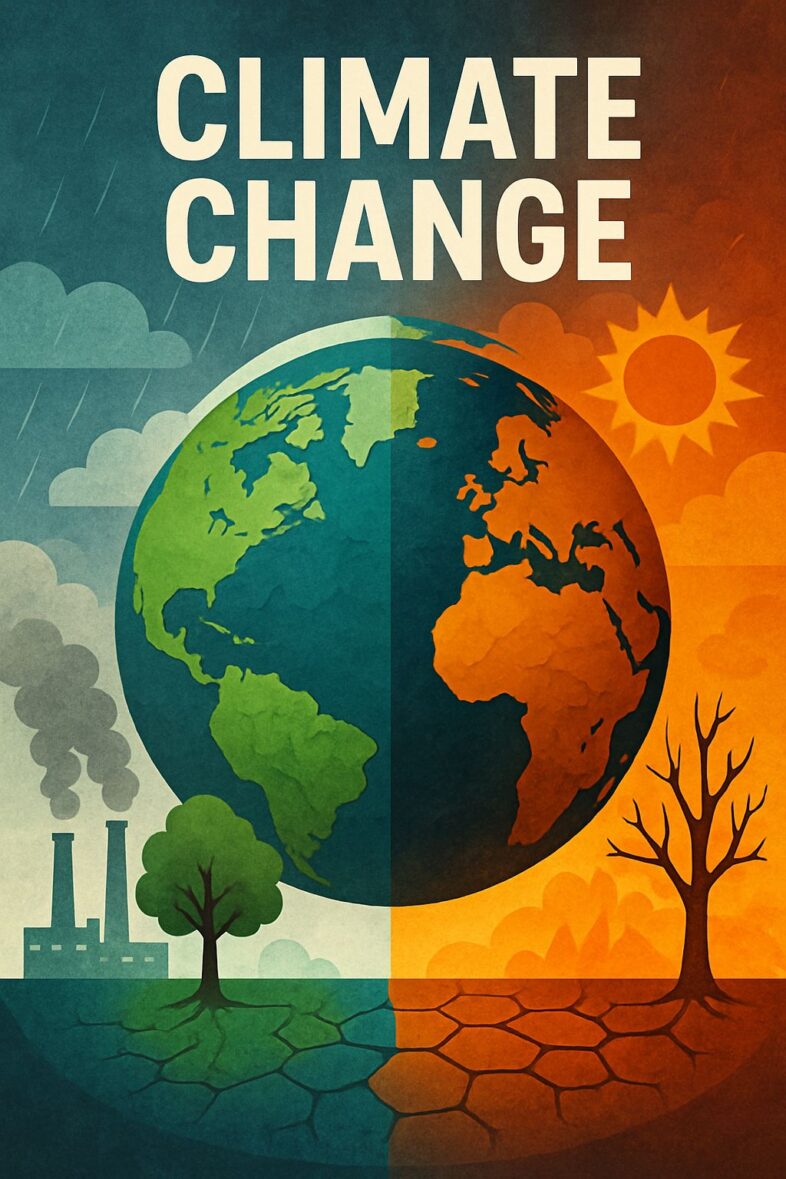
Climate change risk management involves identifying, assessing, and mitigating the physical and transition risks posed by a changing climate to organizations and ecosystems.
Summary
- The four main strategies for managing climate change risk are mitigation, adaptation, geoengineering, and expanding knowledge. The most effective approach combines all four strategies.
- There is no single policy or tactic that can address the full scope of climate risk. Comprehensive management requires layered, coordinated action across sectors and regions.
- There are concrete, science-backed tools available now for natural resource managers to reduce vulnerability in forests, water systems, wetlands, and wildlife habitats.
- Partnerships between scientists and field specialists — where they work side by side — are proving to be the most reliable engine for developing real-world climate solutions.
- Keep reading to find out which resource areas are most vulnerable to climate change, and what practical steps managers and communities can take today.
Climate change is not a future problem — it's a risk management challenge happening right now. The decisions we make today will determine how much damage we'll see tomorrow.
It's true that the enormity of the task can be daunting, but the science is unequivocal: there are tried-and-true, well-documented strategies that communities, governments, and natural resource managers can implement. Groups like Adaptation Partners have dedicated over ten years to developing the proof that transforms climate science into practical action — filling the void between research and real-world decision-making throughout the Western United States and elsewhere.
Grasping the function of these strategies — and the reason they need to work in unison — is the first step for anyone who is serious about lessening climate risk.

“Sustainable Supply Chain Risk …” from www.mdpi.com and used with no modifications.
The Four Key Components of Climate Change Risk Management
Climate change risk management isn't as simple as flipping a switch. It's a comprehensive system built on four unique yet deeply intertwined components, each tackling a different aspect of the issue.
1. Mitigation: Reducing Greenhouse Gas Emissions from the Source
Mitigation is the most straightforward solution to climate change — it involves reducing or eliminating greenhouse gas (GHG) emissions before they can build up in the atmosphere. This includes shifting energy systems away from fossil fuels, enhancing energy efficiency, preserving carbon sinks such as forests and wetlands, and changing industrial and farming practices that produce substantial emissions. For more detailed strategies, you can explore climate mitigation and adaptation strategies.
The reasoning is simple: less carbon in the atmosphere equals less warming, which equals less risk across all other systems. However, mitigation alone operates on long timescales. Even if we drastically reduce emissions today, it won't reverse the warming that's already been set in motion in the climate system — which is precisely why it can't be our only strategy.
- Energy transition: Shifting from coal, oil, and gas to renewable energy sources like solar, wind, and hydropower.
- Land use reform: Protecting and restoring forests, grasslands, and wetlands that sequester carbon naturally.
- Industrial decarbonization: Targeting heavy-emission sectors like cement, steel, and agriculture for efficiency improvements and alternative processes.
- Policy mechanisms: Carbon pricing, emissions trading schemes, and regulatory standards that create economic incentives for emissions reduction.

“Climate change mitigation – Wikipedia” from en.wikipedia.org and used with no modifications.
2. Adaptation: Building Resilience in Human and Natural Systems
Adaptation accepts that some degree of climate change is already unavoidable and focuses on increasing the capacity of communities and ecosystems to withstand its impacts. This ranges from updating building codes to withstand extreme weather, to redesigning water infrastructure for drought conditions, to helping forests recover from wildfire and pest pressures intensified by warming temperatures.
Adaptation policy is naturally local. The tactics employed by a coastal city to manage sea level rise are very different from those needed by a mountain watershed manager dealing with declining snowpack. The power of adaptation is in its specificity — targeted interventions that reduce vulnerability where it's most severe.
3. Geoengineering: Intentional Alteration of Earth's Systems
Geoengineering — often called climate engineering — involves intentional, large-scale actions in the Earth's systems with the goal of counteracting the impacts of greenhouse gas build-up. Methods include everything from solar radiation management (bouncing sunlight back into space) to industrial-scale carbon dioxide removal. These tactics are contentious, come with significant uncertainty about potential side effects, and are mostly in the research and experimental stages. They are not a replacement for mitigation or adaptation, but they are a type of option that policy makers are increasingly needing to comprehend.
4. Expanding our Knowledge: Research for Informed Decision Making
Each aspect of managing climate risk is reliant on the quality of information decision-makers have. Expanding our knowledge — through research, observation systems, technology development, and scientific assessment — is what allows us to refine mitigation strategies, target adaptation plans, and responsibly evaluate the risks of geoengineering.
It's not just about gathering information passively. Actively growing our understanding of the climate helps us identify new risks, find opportunities, and address the vulnerabilities that leave our communities at risk. When those in charge have a clear understanding of how their landscapes and systems are specifically affected by the climate, they can take precise action instead of just responding to crises after they happen.
The Need for a Multifaceted Approach
Scientists agree on one thing: managing the risks of climate change requires a mix of policy responses. The four pillars aren't mutually exclusive. Instead, they strengthen each other, making a combined approach much more effective than any single strategy.
Policy choices are not made in isolation. They combine factual scientific data with value judgments about acceptable risk, economic tradeoffs, and equity concerns that differ greatly among nations, regions, and communities. This complexity is not an excuse for doing nothing—it's a call for a more intelligent, coordinated strategy.
The Interplay of Mitigation and Adaptation
Picture mitigation and adaptation as two sides of the same coin. Mitigation minimizes the long-term impact of climate change by restricting the amount of warming that takes place. Adaptation lessens the damage caused by the warming that is currently taking place or is now inevitable. If mitigation is not implemented, the costs of adaptation increase significantly — it's like continually building taller seawalls against a steadily rising tide. If adaptation is not implemented, the extended timelines of mitigation leave current communities and ecosystems vulnerable during the transition period.
Communities and resource systems that are most resilient are investing in both areas at the same time — reducing emissions while redesigning infrastructure, managing landscapes, and building institutional capacity to respond to the changes that are already happening.
How Value Judgments Impact Policy Choices
Science provides us with information about what is occurring and what is likely to occur. However, it doesn't automatically inform us about how much risk is tolerable, who should take action, or how to balance current costs against future benefits. These are value judgments, and they are at the heart of every decision about climate policy. The American Meteorological Society's thorough policy review makes it clear that there are many options for managing climate risk, each with its own set of strengths and weaknesses. Choosing between these options requires combining factual information with social, economic, and ethical considerations that science alone cannot address.
Managing Diverse Climate Risks Across Different Nations and Communities
Climate risks are not uniform across all communities, and the ability to respond to these risks also varies widely. The risk assessment for small island states that are threatened by rising sea levels is fundamentally different from that of inland agricultural economies that are dealing with changing rainfall patterns. Indigenous communities that rely on specific ecosystems for their cultural and subsistence needs face unique vulnerabilities that are often overlooked by standard economic risk models.
Successful climate risk management must take this unevenness into account. Strategies that are effective at the level of national policy must be translated into actions that are relevant at the local level – which is exactly why frameworks such as the Climate Change Adaptation Library for the Western United States are built on practices that are specific to resources and rooted in the region, rather than prescriptions that fit all sizes.
Natural Resource Areas and Climate Risk Management
Natural resource managers are on the front lines of climate change risk. They are seeing the effects firsthand, such as dying trees, changing stream flows, invasive species moving into new areas, and wildlife populations losing their habitat. That's why the Climate Risk Management Practices, developed by Adaptation Partners and organized by resource area, are so important. They offer managers a solid starting point, synthesizing the most scientifically supported sensitivities and adaptation tactics for seven different resource categories.
How Climate Change Affects Forests and Other Vegetation
Forests are some of the ecosystems most vulnerable to climate change, and the effects can be devastating. Rising temperatures can lead to more frequent and severe wildfires, extend the reach and duration of bark beetle infestations, and alter the conditions necessary for trees to successfully regrow after a disturbance. Non-forest vegetation, such as shrublands, grasslands, and alpine meadows, are also at risk from climate change. These ecosystems can be stressed by drought, altered fire patterns, and invasive species that thrive in warmer, more disturbed conditions. In order to adapt to these changes, we need to reduce the density of trees to lower the risk of fire, promote a diversity of species to increase resilience, and prioritize areas with characteristics like cooler microclimates or reliable water sources that can naturally buffer against climate stress. Exploring the use of sustainable bio-based materials can also contribute to these adaptation strategies.
Water, Infrastructure, and Fisheries at Risk
Water is the primary means by which we feel the impacts of climate change. Less snowfall, earlier snowmelt, more intense rainfall, and longer dry seasons are already putting stress on our water infrastructure and the aquatic ecosystems that rely on consistent water flow. For fisheries and fish habitats, warmer stream temperatures push cold-water species like salmon and trout to the limits of their temperature tolerance, while changes in water flow disrupt the timing of their migration and their ability to spawn successfully. Exploring maritime decarbonization options can be a crucial step towards mitigating these impacts.
Adapting water system infrastructure involves planning for conditions that go beyond what historical records indicate, including extreme floods and extended periods of drought. In terms of fisheries, it involves identifying and safeguarding thermally refugial stream reaches, enhancing riparian vegetation to provide shade, and managing channel conditions to maintain habitat complexity, even as baseline temperatures increase.
Climate Change Impacts on Wetlands, Wildlife, and Recreation
- Wetlands: Climate change is affecting wetlands by changing their size and how they work. Wetlands are important because they clean water, store carbon, and are homes to birds and amphibians.
- Wildlife: Climate change is causing animals to change where they live, when they migrate, and is causing problems with their food. This is causing more problems for animals that are already losing their homes.
- Recreation: Climate change is causing less snow, which is bad for winter sports. It is also causing more wildfires, heatwaves, and changes to the landscape, which is making it harder to do things outside.
People who take care of animals are trying to make sure that animals can move to new homes when climate change makes their old homes bad. This usually means protecting the paths that animals use to move and getting rid of things like roads and fences that get in their way.
Wetland adaptation strategies emphasize the importance of safeguarding currently high-performing systems, rehabilitating damaged wetlands to enhance the water retention capacity of the landscape, and flexibly managing water control structures in response to shifting seasonal trends. These aren't simply measures for biodiversity — functional wetlands are among the most economical climate buffers available to land managers.
Managing recreational facilities in the face of climate change demands a frank evaluation of which facilities and experiences can endure in the predicted future conditions, and which ones need to be rethought or moved. Ski resorts that invest in snowmaking equipment, for instance, are only delaying the inevitable. It's not a long-term solution as warming trends continue to reduce the length of winter seasons at lower altitudes. For more insights on climate adaptation strategies, you can explore climate mitigation and adaptation simultaneously.
In all these areas of concern, the basic principle remains the same: mitigate current stress factors that increase climate vulnerability, safeguard the landscape characteristics that offer natural resilience, and manage adaptively as circumstances continue to change.
Creating Real Solutions through Science-Manager Partnerships
Climate adaptation isn't just about research institutions — it's about scientists and on-the-ground managers coming together as true partners. Adaptation Partners built their entire model around this concept, bringing together research scientists and resource specialists in workshops to look at vulnerability and develop actionable adaptation options. This collaborative approach is what makes climate risk management practices actually get implemented, rather than just staying in reports.
How Does a Vulnerability Assessment Determine Adaptation Choices?
A vulnerability assessment is a process that answers three fundamental questions: What is at risk from climate change? How susceptible is it to these changes? And how well can it adapt? When done thoroughly — with research scientists providing climate forecasts and ecological analysis, and managers contributing local knowledge and operational context — vulnerability assessments create a comprehensive view of where the risk is highest and where intervention will be most effective. For more insights, you can explore strategies to achieve climate mitigation and adaptation simultaneously.
In places like the Sierra Nevada, Cascade Range, Rocky Mountains, and Intermountain West regions, these evaluations have consistently shown trends that aren't immediately apparent from climate forecasts alone. The combination of rising temperatures, existing land use stresses, invasive species, and changed disturbance patterns results in combined vulnerabilities that necessitate comprehensive solutions — not isolated remedies applied to one resource area at a time.
Useful Resources for Natural Resource Managers
For managers working in the Western United States, the Climate Change Adaptation Library is one of the most thorough practical resources available. This library summarizes climate change sensitivities and adaptation practices across all seven resource areas, based on peer-reviewed research and the experiences of practitioners who have been working in science-management partnerships for over a decade. Importantly, the library is intended to be a starting point—a list of well-supported options that managers can choose from and adapt to their specific landscape context, rather than a strict prescription.
What makes these tools genuinely helpful is that they are organized around resource areas rather than climate variables. A watershed manager doesn't need to become a climate scientist — they need to understand how projected changes in temperature and precipitation will affect the streams, riparian areas, and fish populations they're responsible for. That translation — from climate signal to management-relevant impact — is exactly what the Library and the Climate Risk Management Practices framework provide.
Recognizing the Impact of Climate Change on a Macro Scale
Recognizing climate sensitivity begins with asking the right questions at the right scale. What species, habitats, or infrastructure systems in this particular landscape are most exposed to projected changes in temperature and precipitation? Which of these are most sensitive — meaning a relatively small change in climate conditions produces a disproportionately large response? And critically, which have limited capacity to adapt on their own? The answers to these three questions, mapped across a real landscape, reveal where climate risk is concentrated and where management intervention will produce the greatest return.
What this looks like on the ground is taking climate forecast data and combining it with detailed ecological and infrastructure inventories, then layering that with the type of knowledge that only comes from years of working a specific landscape. A district ranger who knows which stream reaches go dry first in drought years, or which forest stands are already showing stress from bark beetle pressure, holds irreplaceable ground-truth information that makes climate sensitivity analysis actionable rather than theoretical. The integration of scientific modeling and local expertise is the methodological foundation of the Adaptation Partners approach, and it's what makes the resulting management practices credible enough to actually drive decisions.
The Role of Monitoring in Filling Knowledge Gaps
Even the most comprehensive vulnerability assessments can still leave knowledge gaps. These are areas where the data is not robust enough to confidently characterize risk, or where climate projections are uncertain enough that multiple management scenarios need to be considered at the same time. Monitoring is the tool that fills these gaps over time. Strategic and well-designed monitoring programs track how climate-sensitive indicators such as stream temperatures, snowpack depth, vegetation community composition, and wildlife population trends respond to actual climate conditions as they happen. This allows managers to detect early warning signals before issues turn into crises.
Adaptive management is a strategy that can be used to address climate change, and monitoring is a key component of this approach. When a restoration intervention is put into place, such as replanting with more drought-tolerant species or installing large wood structures to improve stream habitat complexity, monitoring allows managers to see if the intervention is effective under actual conditions. Without this feedback loop, climate adaptation becomes a series of interventions that are implemented without any accountability. However, with monitoring, management strategies can be modified and improved as our understanding of climate science advances.
What Every Climate Change Advocate Should Do Next
The evidence is clear, the tools are available, and the need for action is immediate — what's left is the determination to act at all levels, from national policy to individual land management choices. Start by learning about the specific climate vulnerabilities in your area, engage with the frameworks and resources that turn science into action, and insist that the institutions responsible for managing natural and human systems use them. Adaptation Partners continues to spearhead the science-management collaboration that turns climate knowledge into on-the-ground resilience — explore their work and consider how it can be applied to the landscapes and communities that matter to you. For additional strategies, check out the World Resources Institute on how to achieve climate mitigation and adaptation simultaneously.
Commonly Asked Questions
Here are the answers to some of the most frequently asked questions about managing the risks of climate change, including the main strategies, tools, and collaborations that make up this area.
What separates climate change mitigation from adaptation?
Mitigation encompasses actions that aim to decrease or eliminate greenhouse gas emissions to minimize the future impact of climate change. On the other hand, adaptation includes actions that aid communities, ecosystems, and infrastructure in dealing with the climate changes that are currently happening or are now inevitable. Both are crucial — mitigation dictates how severe the problem will become, while adaptation dictates how much damage will result from the changes that are already happening.
What is geoengineering and is it safe?
Geoengineering, also known as climate engineering, is a set of proposed large-scale interventions in Earth's systems intended to counteract the warming caused by greenhouse gases. These interventions include solar radiation management, which involves reflecting sunlight away from Earth, and removing carbon dioxide from the atmosphere on an industrial scale. Most geoengineering proposals are still in the research and experimental stages, and there is significant uncertainty about their potential side effects. They are not seen as a substitute for reducing emissions or adapting to climate change. The scientific community is studying these proposals carefully, but none have been implemented on a large scale as part of a climate policy.
How are climate risk management strategies created and tested?
Climate risk management strategies are created through structured partnerships between scientists and natural resource specialists. This process begins with science-based vulnerability assessments. These are thorough analyses of which systems and species are most exposed and sensitive to climate change and have the least capacity to adapt on their own. The findings from these assessments are then used in facilitated workshops. Here, resource specialists use the findings to identify and evaluate specific adaptation options relevant to their management context.
These strategies are based on the most recent scientific research, which is reviewed by experts in the field. They are compiled in the Climate Change Adaptation Library for the Western United States and are constantly being improved upon through feedback from those who use them. They are not set in stone — as we learn more about climate change and gather more data, the strategies are updated to reflect our current knowledge. This process of constant review and improvement is what sets these strategies apart from other, more generic guidelines and makes them reliable enough to be used in real-world decision making.
Who in the United States is using climate risk management strategies?
In the United States, the main users of climate risk management strategies are natural resource managers. These professionals work on federal, state, and tribal lands. They include employees of the U.S. Forest Service, field offices of the Bureau of Land Management, resource managers of the National Park Service, state fish and wildlife agencies, and tribal natural resource departments. These managers are in charge of forests, watersheds, fisheries, wetlands, and wildlife habitats. These areas are already showing the measurable effects of climate change. These managers need practical guidance that is backed by science to respond to these changes, such as exploring low-carbon farming practices.
More and more, municipal water utilities are planning for drought and flood extremes, infrastructure agencies are designing for a wider range of climate conditions, and emergency management offices are developing response plans for climate-amplified disasters. The core methodology is the same for all of them: assess vulnerability, identify sensitivities, use targeted adaptation practices, and monitor outcomes. It’s a methodology that can be used across sectors, even when the specific practices vary widely by context, including efforts in maritime decarbonization.
What is the role of expanding climate knowledge in risk management?
By expanding our knowledge of climate, we can provide decision-makers with the data they need to choose, execute, and fine-tune risk management strategies with more accuracy and assurance. Research improves the precision of climate predictions at the regional and local levels where management decisions are made. Observation systems, such as remote sensing, stream gauges, weather stations, and ecological monitoring networks, monitor how actual conditions are changing in relation to predictions, allowing for early identification of emerging risks. For example, sustainable bioenergy is an area where expanding climate knowledge can significantly impact risk management.
Expanding our understanding can also uncover risks and opportunities that aren't apparent in the data we currently have. For example, a recent study on the thermal refugia characteristics of specific stream reaches might show that a stretch of river we thought was marginal for cold-water fish is actually one of the most climate-resilient habitats in a watershed. This would completely change the management priority it should be given. This kind of discovery, when repeated across different resource areas and regions, can lead to significantly improved risk management over time.
Arguably the most important aspect is that a growing body of knowledge supports adaptive management – the continuous cycle of planning, implementing, monitoring, and adjusting that allows climate response strategies to evolve as conditions change and understanding deepens. Without ongoing investment in climate research, observation infrastructure, and the science-management partnerships that translate knowledge into practice, risk management strategies become progressively less effective as climate change continues to push systems beyond the range of historical experience. To stay ahead of that curve, it's necessary to treat knowledge expansion not as a background support function, but as a core pillar of climate risk management strategy in its own right.
Sure, could you please provide the content you would like me to rewrite?

Carbon Offsets vs. Carbon Credits: Key Differences Explained for Corporate Buyers
You know how quickly a climate change amelioration purchase that a company's net-zero policy requires the environmental manager to make can become confusing. In fact, it is quite common for finance, legal and sustainability teams to use the same word for different things. Carbon offsets vs carbon credits is not a simple choice between two […]

Decentralized Renewable Energy Decarbonisation Solutions & Innovations
Decentralized renewable energy (DRE) is changing the energy landscape by generating power near the point of use, enhancing efficiency and equity. This local approach empowers communities while tackling energy access and decarbonization, making it a critical solution for a sustainable future…

The Future of Sustainable Bio-based Materials and Products
Bio-based materials are products and materials made from renewable biological resources like plants, animals, and microorganisms. They are a sustainable alternative to traditional fossil-fuel-based products, offering advantages such as a smaller carbon footprint and reduced reliance on finite resources. Common examples include timber, hemp, and bio-based plastics like polylactic acid (PLA), and they are used […]

A Success Story: LFG-to-Energy Conversion Units Transforming Landfill Gas in California
California's landfill gas-to-energy conversion units are redefining waste management by transforming captured methane into electricity, renewable natural gas for vehicles, and liquefied natural gas. These advancements mark a significant step towards sustainability, reducing carbon footprints and turning waste into a valuable, clean energy resource…