

Article At A Glance
- Decentralized renewable energy (DRE) systems generate and distribute power at or near the point of use, bypassing the inefficiencies of traditional centralized grids.
- Over 570 million people in Sub-Saharan Africa still lack electricity access — DRE is the most viable path to closing that gap at scale.
- Technologies like rooftop solar, battery storage, and green hydrogen are driving the decarbonization push from the ground up.
- Fragmented policies and limited financing remain the two biggest roadblocks slowing DRE adoption in emerging markets.
- Corporate clean energy demand is outpacing supply by 27 terawatt hours — a gap that decentralized systems are uniquely positioned to fill.
The energy transition isn't waiting for massive power plants to be built — it's already happening on rooftops, in rural microgrids, and inside shipping containers converted into battery storage units.
Decentralized renewable energy is fundamentally changing who controls power, where it comes from, and who gets access to it. Unlike the century-old model of large central power stations pushing electricity through thousands of kilometers of transmission lines, DRE generates energy close to where it's actually used. That single shift has enormous consequences for efficiency, resilience, cost, and equity.
For those tracking the energy transition, resources like the Climate Policy Initiative provide critical data on financing gaps and investment barriers shaping how DRE scales globally — including the finding that existing DRE business models still fail to address the most persistent barriers to private investment.
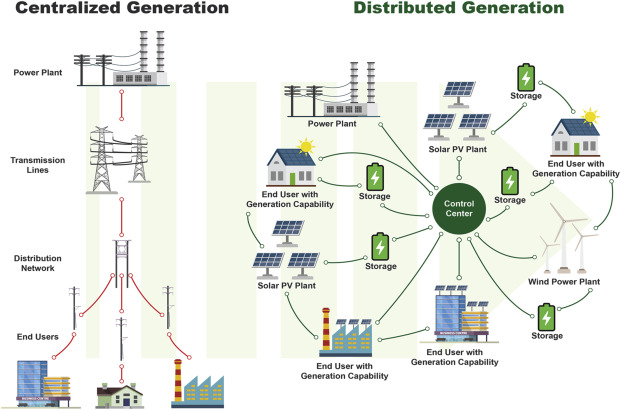
“Decentralized Energy Resource – an …” from www.sciencedirect.com and used with no modifications.
What Decentralized Renewable Energy Actually Is
Decentralized renewable energy refers to energy systems that generate electricity or heat from renewable sources at or near the point of consumption. These systems can be off-grid, operating entirely independently, or grid-connected, feeding surplus power back into the broader network. The scale ranges from a single solar panel on a household rooftop to a community microgrid serving thousands of homes.
Centralized vs. Decentralized Energy: The Core Difference
Traditional centralized energy systems rely on a handful of large generation facilities — coal plants, nuclear stations, large hydroelectric dams — that push power outward through high-voltage transmission infrastructure. The problem with this model is structural: energy is lost in transmission, the system is vulnerable to single points of failure, and communities far from the grid simply go without. Decentralized systems flip this architecture entirely.
In a decentralized model, generation is distributed across many smaller nodes — rooftop solar arrays, small wind turbines, biogas digesters, battery systems. Each node contributes to local energy security while reducing dependence on long-distance infrastructure. The result is a more resilient, adaptive, and ultimately more democratic energy system.
Why Decentralization Matters for Decarbonization
Decarbonization requires replacing fossil fuel generation with clean alternatives at every level of the energy system — not just at the utility scale. DRE makes that possible in places and at speeds that centralized systems simply cannot match. Here's why it's central to any serious climate strategy:
- Speed of deployment: Rooftop solar and small-scale battery systems can be installed in days, not decades.
- Energy access at the margins: DRE reaches rural and underserved communities that centralized grids have ignored for generations.
- Alignment with SDGs: DRE directly supports SDG 7 (Affordable and Clean Energy) and SDG 13 (Climate Action).
- Local economic benefit: Community ownership of energy assets keeps revenue local and builds energy democracy.
- Grid stress reduction: Distributed generation reduces peak load pressure on centralized infrastructure.
The IEA has noted that in 2019, only one-fifth of all globally deployed renewable capacity came from large utility-scale installations — meaning the vast majority of renewable growth was already happening at smaller, more distributed scales. That trend has only accelerated since, highlighting the importance of climate change risk management strategies.
The Role of Private Sector Investment in DRE Growth
Private investment is the engine DRE needs to scale — but it remains frustratingly constrained. In markets like Indonesia, high interest rates from local banks, limited appetite for renewable energy lending, and fragmented regulatory environments actively discourage developers. The financing gap is not a minor obstacle; it's the defining challenge of the sector. Policy reform, blended finance instruments, and de-risking mechanisms are essential to unlocking the capital that DRE projects require to move from pilot to scale.
The Biggest DRE Technologies Driving Decarbonization Right Now
Several technologies are doing the heavy lifting in the DRE transition. Each brings a different set of strengths, deployment contexts, and cost profiles — and together, they form a toolkit capable of decarbonizing energy systems from Sub-Saharan villages to industrial supply chains.
Rooftop Solar and Distributed Solar Generation
Rooftop solar is the most widely deployed DRE technology on the planet, and for good reason. The cost of photovoltaic panels has dropped more than 89% over the past decade, making solar-generated electricity cheaper than grid power in most markets.
Distributed solar generation — whether on homes, commercial buildings, or community installations — allows energy to be produced exactly where it's consumed, eliminating transmission losses entirely.
Beyond cost, rooftop solar democratizes energy production. A smallholder farmer in Kenya with a 200-watt panel and a small battery can power lighting, phone charging, and a water pump — assets that directly improve productivity and quality of life. At the commercial scale, businesses are installing rooftop arrays to hedge against utility price volatility and meet corporate sustainability commitments.
Battery Storage and Grid-Scale Energy Management
Solar and wind are intermittent by nature — the sun doesn't always shine and the wind doesn't always blow. Battery storage solves this problem by capturing surplus generation and dispatching it when it's needed most. Lithium-ion battery costs have fallen dramatically, and newer chemistries like lithium iron phosphate (LFP) are making storage systems safer, longer-lasting, and more cost-effective for DRE applications. At the community microgrid level, a well-designed battery system can provide 24-hour reliable power from 100% renewable sources.
Unsubsidised Anaerobic Digestion with Upgrading and Methane Production
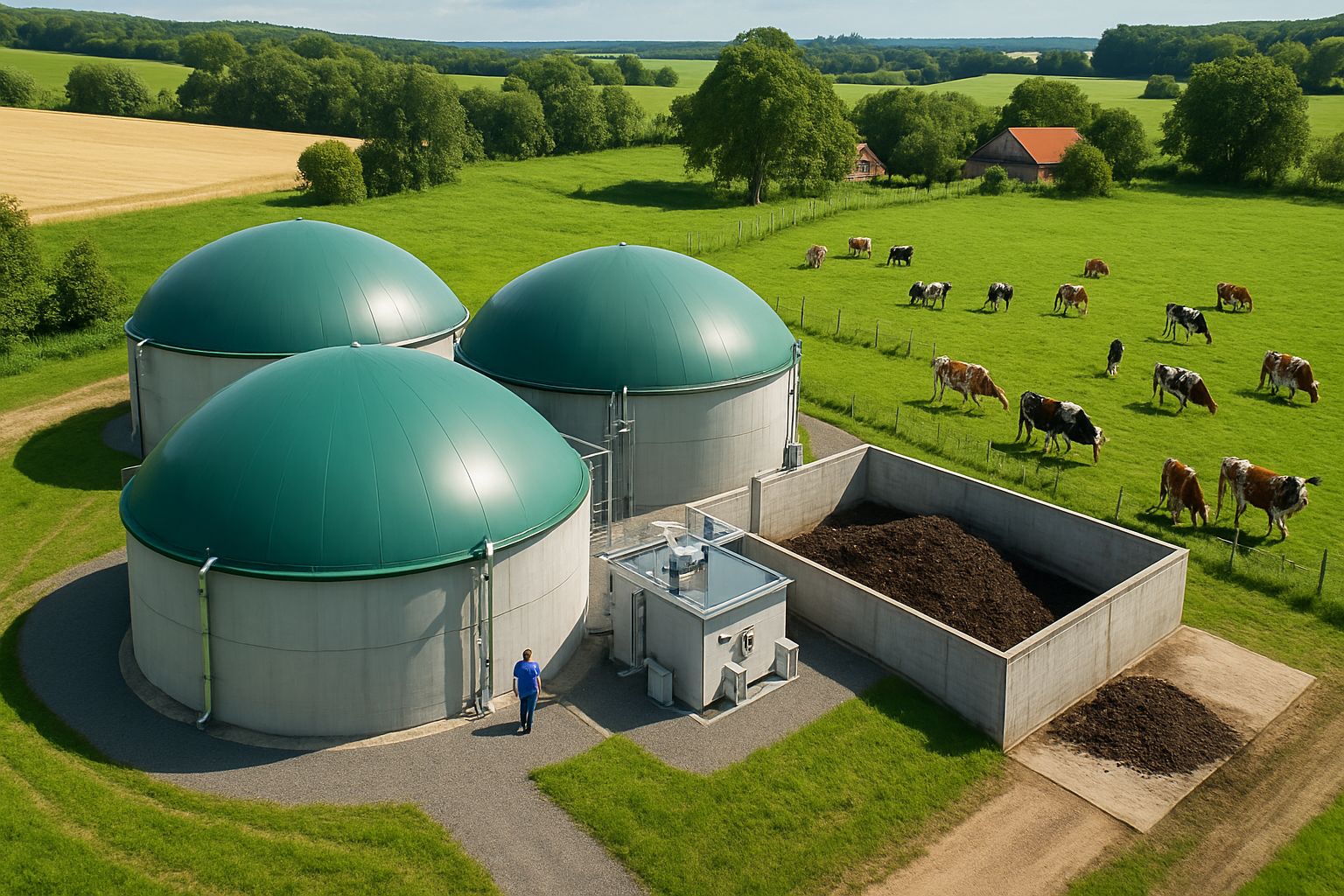
Anaerobic digestion (AD) converts organic waste — agricultural residues, food waste, animal manure — into biogas, which can then be upgraded to biomethane, a direct substitute for natural gas. What makes AD particularly powerful in a DRE context is that it turns a waste problem into an energy asset.
Farms and food processors generate feedstock continuously, meaning AD systems can provide baseload renewable energy — something solar and wind alone cannot do. In rural areas with active agriculture, unsubsidised AD with methane upgrading represents a financially viable, community-scale path to clean energy that doesn't depend on grid access or government support.
Green Hydrogen for Hard-to-Abate Sectors
Green hydrogen — produced by using renewable electricity to split water molecules through electrolysis — is emerging as the decarbonization solution for sectors that simply can't be electrified directly. Steel manufacturing, cement production, long-haul shipping, and industrial chemical processes all require energy-dense fuels that batteries can't yet replace at scale. Green hydrogen fills that gap.
At the decentralized level, small-scale electrolyzers powered by local solar or wind arrays can produce hydrogen on-site, eliminating the need for large centralized hydrogen production facilities and the costly infrastructure required to transport it.
Pay-As-You-Go Financing Models Powering DRE Adoption
One of the most transformative innovations in DRE isn't a technology — it's a business model. Pay-As-You-Go (PAYG) financing allows households and small businesses in low-income markets to access solar systems, batteries, and clean cooking solutions without any upfront capital. Customers make small, regular payments — often via mobile money platforms — and ownership transfers to them once the system is paid off.
This model has unlocked DRE access for millions of people who would otherwise be excluded from the clean energy transition entirely.
PAYG has proven particularly effective across East Africa, where mobile money penetration is high and grid access is low. Companies operating PAYG models have demonstrated that low-income rural customers are reliable payers when the product directly improves their daily lives. The model also generates repayment data that can be used to build credit profiles — giving first-time borrowers a financial foothold that extends well beyond energy access.
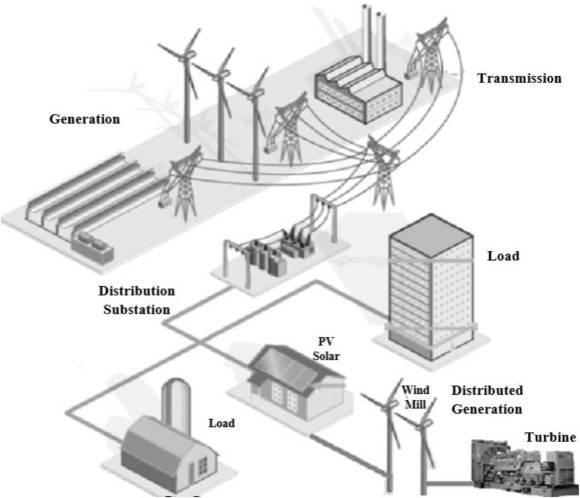
“Decentralized Energy System – an …” from www.sciencedirect.com and used with no modifications.
How DRE Is Closing the Energy Access Gap in Underserved Regions
Energy poverty is not an abstract policy problem — it's a daily reality for over a billion people worldwide. Without reliable electricity, children study by kerosene light, health clinics can't refrigerate vaccines, and small businesses can't operate after dark.
DRE is the most practical, scalable, and cost-effective tool available to change that reality — and the evidence from the field is compelling. For more on sustainable energy options, explore why sustainable bioenergy still matters.
570 Million People Without Electricity in Sub-Saharan Africa
Sub-Saharan Africa holds some of the world's richest renewable energy resources — abundant solar irradiation, strong wind corridors, and significant geothermal and hydroelectric potential. Yet over 570 million people in the region's rural communities still lack access to electricity.
Traditional centralized energy models, shaped in many cases by colonial-era infrastructure priorities and decades of institutional underinvestment, have consistently failed to reach these populations. DRE systems — microgrids, solar home systems, and community-scale installations — are the only realistic near-term solution for closing this gap at the speed the climate and development crises demand.
Learn more about energy security without fossil fuel lock-in and why sustainable bioenergy still matters.
Indonesia's 23% Renewable Energy Target and the Investment Gap
Indonesia has committed to achieving 23% renewable energy in its national energy mix as part of its National Energy Policy — an ambitious target for an archipelago of over 17,000 islands where grid extension is physically and economically impractical for hundreds of remote communities. DRE is not just a useful complement to Indonesia's energy strategy; it is structurally essential to achieving it.
However, the Climate Policy Initiative has found that existing DRE business models in Indonesia fail to adequately address the sector's core barriers, including policy fragmentation, limited access to debt financing, and high perceived investment risk that keeps private capital on the sidelines. For more information on overcoming these challenges, you can explore various climate change risk management strategies.
Case Studies: Kenya, Nigeria, South Africa, and Ethiopia
Across Sub-Saharan Africa, DRE deployment strategies vary significantly depending on each country's resource endowment, regulatory environment, and financing ecosystem. Four countries illustrate both the promise and the complexity of scaling DRE in the region:
- Kenya: A mature mobile money ecosystem and progressive off-grid solar regulation have made Kenya one of the world's leading PAYG solar markets, with millions of solar home systems deployed across rural counties.
- Nigeria: Despite being Africa's largest economy, over 85 million Nigerians lack reliable grid access. Distributed solar and mini-grid projects are scaling rapidly, supported by the Rural Electrification Agency's energization framework.
- South Africa: Rooftop solar adoption has surged among both commercial and residential users in response to the country's persistent load-shedding crisis, demonstrating how grid instability can accelerate DRE uptake even in middle-income markets.
- Ethiopia: With significant untapped solar and wind resources, Ethiopia is investing in community microgrids to power health facilities and schools in regions where the national grid may not arrive for decades.
What these four markets share is a recognition that waiting for centralized grid expansion is no longer a viable strategy. The communities that have embraced DRE are not just gaining electricity — they're building energy resilience that insulates them from fuel price shocks, climate disruptions, and infrastructure failures.
The financing models behind these deployments are equally diverse. Grants, concessional loans, results-based financing, and PAYG structures are all being layered together to reduce risk for private investors and make projects financially viable in markets where commercial returns alone are insufficient to attract capital at scale.
The Barriers Slowing Down DRE Adoption
Despite compelling technology, proven business models, and urgent need, DRE adoption continues to face significant structural headwinds. These barriers aren't theoretical — they're actively preventing projects from being financed, permitted, and built in the markets that need them most:
- Fragmented and inconsistent national energy policies that create regulatory uncertainty for investors
- Limited local bank appetite for renewable energy lending, combined with high interest rates on available debt
- Technical capacity gaps in project development, installation, and ongoing operations and maintenance
- Weak governance frameworks that slow permitting, grid interconnection approvals, and power purchase agreement negotiations
- Insufficient blended finance mechanisms to de-risk early-stage DRE projects in frontier markets
These barriers don't operate in isolation — they compound each other. A developer who navigates a fragmented policy environment then faces a local bank unwilling to lend, then encounters a permitting process that takes two years.
Each layer of friction raises the cost of capital and narrows the pool of projects that can realistically proceed. For insights on overcoming these challenges, explore climate change risk management strategies.
The Climate Policy Initiative has identified that to unlock decentralized renewable energy to its full potential, policymakers and regulators must act on multiple fronts simultaneously. Policy reform alone is insufficient — it must be paired with sustainable business models and tailored financial instruments designed specifically for the DRE sector's risk profile.
Energy democracy — the principle that communities should have ownership and control over their energy resources — is also a governance challenge, not just a philosophical one. When DRE projects are designed without meaningful community input and ownership structures, they face resistance, underutilization, and maintenance failures that undermine the entire investment.
The good news is that each of these barriers has a known solution. The challenge is implementation — aligning political will, institutional capacity, and private capital in markets where all three are historically in short supply. For more insights, explore decarbonizing energy with innovation.
Fragmented Policies and Regulatory Gaps
In many emerging markets, energy regulation was designed for centralized utility models and has not kept pace with the distributed energy revolution. Policies governing grid interconnection, net metering, licensing for small-scale generators, and community energy ownership are often absent, contradictory, or prohibitively complex.
This regulatory fragmentation creates a chilling effect on private investment — developers can't underwrite a business case when the rules of the market can shift without warning. Integrated policy reform, informed by regional collaboration and evidence from successful DRE markets, is essential to creating the stable regulatory environments that investors require.
Limited Access to Finance for DRE Projects
Access to affordable debt financing is the single most cited barrier in DRE market assessments. Local commercial banks in emerging markets typically have little experience underwriting renewable energy assets, no established valuation frameworks for solar home systems or microgrid infrastructure, and institutional risk appetites calibrated for conventional lending.
The result is that DRE developers are either locked out of local debt markets entirely or forced to accept interest rates that make project economics unworkable. For more insights on enhancing decentralized renewable energy investment, you can explore this comprehensive study.
Innovative financing solutions are emerging to address this gap — including first-loss guarantees from development finance institutions, blended finance structures that use concessional capital to attract commercial investment, and green bonds issued by development banks. But these instruments need to be deployed at greater scale and with less administrative complexity to meaningfully shift the financing landscape for DRE projects in frontier markets.
Technical and Governance Challenges in Emerging Markets
Beyond finance and policy, DRE projects in emerging markets face persistent technical and governance challenges that affect both deployment and long-term performance. Skilled technicians for installation and maintenance are in short supply in many rural areas, meaning systems that fail often stay failed.
Governance structures for community-owned microgrids are frequently underdeveloped, leading to revenue collection failures, free-rider problems, and eventual system collapse. Addressing these challenges requires sustained investment in local technical training, robust community engagement processes, and governance models that have been tested and refined in comparable contexts.
Innovations Accelerating the DRE Transition
The decentralized renewable energy sector is not standing still. A wave of technological and financial innovation is actively dismantling the barriers that have historically kept DRE projects from reaching their potential. These innovations aren't incremental — they're systemic shifts that are changing the economics, the governance, and the operational reliability of distributed energy systems at every scale.
What's particularly significant is that these innovations are reinforcing each other. Smart grid technology makes distributed assets more manageable. Better data makes financing more accessible. More accessible financing accelerates deployment. More deployment drives down costs. The flywheel is spinning — and the communities and investors who recognize this early are positioning themselves to capture enormous value as the transition accelerates.
The IEA's energy transition framework recognizes explicitly that the new decarbonized energy model needs to be more productive, with more energy-efficient industries and transportation systems driving economic growth across this highly decentralized system with energy resources spread across the built environment. The innovations below are the mechanisms making that vision operational.
Digitalisation and Smart Grid Technology
Digital technology is solving one of DRE's most persistent operational challenges: managing thousands of distributed generation assets across diverse geographies with limited human oversight. Smart meters, IoT-connected inverters,
AI-driven energy management systems, and cloud-based monitoring platforms now allow operators to track performance, predict failures, optimize dispatch, and collect payments remotely — from microgrids in rural Ethiopia to rooftop solar fleets in urban Indonesia.
This digitalization layer is what transforms a collection of individual solar panels into a coordinated, manageable distributed energy network. It also generates the operational data that lenders and investors increasingly require before committing capital to DRE projects in frontier markets.
Blended Financing Models and Regulatory Reform
Blended finance — the strategic use of concessional public capital to catalyze private investment — is the most powerful tool currently available for scaling DRE in markets where commercial returns alone are insufficient.
Development finance institutions like the IFC, PROPARCO, and FMO are deploying first-loss guarantees, subordinated debt, and technical assistance facilities that reduce the risk profile of DRE projects enough to attract commercial bank participation. When paired with genuine regulatory reform — streamlined permitting, transparent grid interconnection rules, and enforceable power purchase agreements — blended finance structures can fundamentally change the investment calculus for private developers operating in emerging markets.
The key is ensuring these instruments are designed with the specific risk profile of DRE in mind, not simply adapted from infrastructure financing frameworks built for large centralized projects.
Corporate Demand for Renewable Energy Is Outpacing Supply by 27 Terawatt Hours
Corporate procurement of renewable energy has become one of the most powerful demand signals in the global energy market — and it's creating an urgent supply gap that decentralized systems are uniquely positioned to fill. The global corporate clean energy demand now outpaces available supply by 27 terawatt hours, driven by Science Based Targets commitments, RE100 membership obligations, and investor pressure on Scope 2 emissions disclosures.
Large corporations with manufacturing operations, data centers, and distributed retail footprints across emerging markets are increasingly turning to behind-the-meter solar, on-site battery storage, and community renewable energy offtake agreements to meet their targets — because waiting for centralized grid decarbonization is not a credible emissions reduction strategy on the timelines they've committed to.
This corporate demand is not just accelerating DRE deployment in developed markets; it's pulling investment into emerging market DRE projects through global supply chain sustainability requirements that make local clean energy access a procurement prerequisite for international buyers.
Frequently Asked Questions
Decentralized renewable energy generates a lot of questions — from first-time solar adopters curious about whether rooftop panels make financial sense, to policymakers trying to understand how DRE fits into national electrification strategies. The answers below address the most common questions with the specificity they deserve.
If you're new to the topic, the FAQs below will give you a solid conceptual foundation. If you're already working in the sector, they offer a useful framework for explaining DRE's value proposition to stakeholders who may be encountering it for the first time.
What is decentralized renewable energy and how does it differ from traditional energy systems?
Decentralized renewable energy refers to power generation systems that produce electricity or heat from renewable sources — solar, wind, biomass, small hydro, geothermal — at or near the point of consumption, rather than at a centralized facility that distributes power through a large transmission network.
The scale can range from a single 50-watt solar panel on a household rooftop to a community microgrid serving several thousand homes and businesses.
Traditional energy systems are built around the opposite logic: large, centralized power stations generate electricity in bulk, which is then transmitted over high-voltage lines for hundreds or thousands of kilometers before being stepped down and distributed to end users.
This model is efficient at scale in dense urban environments but is inherently ill-suited to rural populations, island communities, and any context where transmission infrastructure is too costly to build or too vulnerable to maintain reliably.
How does decentralized renewable energy contribute to decarbonization?
DRE contributes to decarbonization by replacing fossil fuel generation — whether diesel generators, coal-fired grid electricity, or kerosene for lighting — with zero-emissions renewable alternatives at the point of use. Every kilowatt-hour generated from a rooftop solar system or a community biogas plant is a kilowatt-hour that doesn't require burning fossil fuels, with no transmission losses added on top.
The decarbonization impact of DRE extends beyond direct emissions reductions. By enabling communities, businesses, and industries to generate their own clean power, DRE reduces systemic dependence on fossil fuel infrastructure — making the overall energy system more resilient to carbon pricing, fuel supply disruptions, and the physical risks of climate change that are increasingly affecting centralized energy infrastructure.
DRE also directly supports the Sustainable Development Goals most central to climate action. SDG 7 calls for universal access to affordable, reliable, sustainable, and modern energy. SDG 13 demands urgent action to combat climate change.
Decentralized renewable energy is one of the few mechanisms that simultaneously advances both goals — delivering clean energy access to the populations most vulnerable to climate impacts while actively reducing the emissions driving those impacts. To further explore how sustainable energy can be achieved without relying on fossil fuels, check out this discussion on sustainable bioenergy.
What are the main barriers to decentralized renewable energy adoption in developing countries?
The most significant barriers fall into three interconnected categories: policy fragmentation, financial access constraints, and technical capacity gaps. Regulatory frameworks in most developing countries were designed for centralized utility models and haven't been updated to accommodate small-scale distributed generators, community energy ownership structures, or grid interconnection of variable renewable sources.
Local commercial banks frequently lack both the expertise to evaluate DRE assets and the institutional appetite to lend to projects with unfamiliar risk profiles. And in many rural markets, the skilled workforce needed to install, operate, and maintain DRE systems simply doesn't exist at the scale required for rapid deployment.
These three barriers reinforce each other — regulatory uncertainty increases perceived risk, which reduces financing availability, which slows deployment, which in turn limits the development of local technical expertise. Breaking this cycle requires coordinated action across all three dimensions simultaneously, not sequential reform efforts that address one barrier at a time.
How is green hydrogen used in decentralized energy systems?
Green hydrogen is produced by using renewable electricity — from solar, wind, or other DRE sources — to power an electrolyzer that splits water molecules into hydrogen and oxygen. The hydrogen can then be stored, transported, and used as a clean fuel for applications that can't be directly electrified.
In a decentralized context, small-scale electrolyzers co-located with renewable generation assets allow hydrogen to be produced on-site, eliminating the need for large centralized production facilities and the costly pipeline or tanker infrastructure typically required to move hydrogen to point of use.
The primary application of green hydrogen in DRE systems is decarbonizing hard-to-abate industrial sectors and providing long-duration energy storage. A steel mill or cement plant that cannot be electrified can use on-site green hydrogen as a process fuel.
A remote community with excess solar generation during peak hours can convert that surplus to hydrogen for use during periods of low generation or high demand — effectively providing seasonal energy storage that battery systems alone cannot economically deliver at scale.
Green hydrogen is still in the early stages of cost competitiveness compared to fossil-derived hydrogen, but electrolyser costs are falling rapidly and several markets are implementing hydrogen-specific policy support to accelerate the transition.
For DRE systems in industrial contexts — mining operations, agricultural processing facilities, remote manufacturing sites — green hydrogen is increasingly the most credible pathway to full decarbonization of energy-intensive processes.
What role does private investment play in scaling decentralized renewable energy solutions?
Private investment is the only mechanism capable of deploying DRE at the speed and scale that the energy access and climate crises demand. Public funding, development finance, and grant capital are essential for de-risking early-stage markets and financing projects where commercial returns are insufficient — but they cannot substitute for the volume of private capital required to electrify hundreds of millions of people across dozens of markets simultaneously.
The Climate Policy Initiative has identified that unlocking this private capital requires policy reform, sustainable business models, and tailored financial instruments working in concert — no single lever is sufficient on its own.
The good news is that private investor interest in DRE is genuinely growing, driven by falling technology costs, improving revenue visibility through PAYG and long-term offtake agreements, and increasing pressure from limited partners and shareholders to demonstrate credible climate impact.
Impact investors, green bond markets, and corporate sustainability procurement are all creating new channels for private capital to flow into DRE projects that would have been considered uninvestable a decade ago. For instance, initiatives like climate change risk management strategies are increasingly influencing investment decisions in the sector.
The frontier challenge is moving private investment beyond the most commercially attractive DRE markets — rooftop solar in middle-income urban areas, large-scale wind in markets with established power purchase agreement frameworks — into the rural, low-income, and frontier market contexts where the energy access need is greatest and the commercial risk is highest.
That's where blended finance, regulatory reform, and community ownership models become essential tools for making private investment work where it's needed most. With the right enabling environment, private capital can and does follow — and when it does, the pace of DRE deployment accelerates in ways that no public program alone could achieve. For instance, exploring biomethane production can provide additional pathways for sustainable energy solutions.
Decentralized renewable energy solutions are becoming increasingly important in the global effort to combat climate change. These systems allow for the generation of energy at or near the point of use, reducing the need for extensive transmission infrastructure and minimizing energy loss.
By embracing these technologies, communities can become more self-sufficient and resilient. Innovative approaches are being developed to enhance the investment in decentralized renewable energy, as highlighted in a recent publication that discusses strategies to achieve national energy goals.

Carbon Management Software & Climate Consultants: Best Tools for Businesses & Compliance Teams
You know how carbon data can look manageable in a spreadsheet until finance, procurement and legal each need a different answer from it? That is where carbon management software earns its place, turning scattered utility bills, purchasing records and supplier data into a controlled process for carbon accounting, sustainability reporting and decarbonisation. The key distinction […]

Carbon Offsets vs. Carbon Credits: Key Differences Explained for Corporate Buyers
You know how quickly a climate change amelioration purchase that a company's net-zero policy requires the environmental manager to make can become confusing. In fact, it is quite common for finance, legal and sustainability teams to use the same word for different things. Carbon offsets vs carbon credits is not a simple choice between two […]

Climate Change Risk Management Strategies & Solutions
Climate change risk management is essential now. Combining mitigation, adaptation, geoengineering, and expanding knowledge offers the best approach. Effective partnerships between scientists and field specialists drive real-world climate solutions. Discover strategies to reduce vulnerability across forests, water systems, and wildlife habitats for a sustainable future…

Maritime Decarbonization Options: Alternative Fuels Guide
Maritime decarbonisation is the strategic process of reducing greenhouse gas emissions in shipping. From LNG to biofuels, ammonia, and hydrogen, each alternative fuel offers unique benefits and challenges. Shore power, often overlooked, can significantly reduce port emissions without altering vessel fuel systems…