
You know how carbon data can look manageable in a spreadsheet until finance, procurement and legal each need a different answer from it? That is where carbon management software earns its place, turning scattered utility bills, purchasing records and supplier data into a controlled process for carbon accounting, sustainability reporting and decarbonisation.
The key distinction is simple: a dashboard is useful, but an evidence trail is what helps a business defend its numbers. The GHG Protocol separates direct operational emissions in Scope 1, purchased-energy emissions in Scope 2, and value-chain emissions in Scope 3, so your system needs to show where each figure came from and which assumptions sit behind it.
This guide compares leading platforms, explains where climate consultants add practical value, and shows how to choose a solution that supports financial reporting, supplier engagement and climate action.
Key Takeaways
- Carbon management software should create a clear audit trail for Scope 1, Scope 2 and Scope 3 data, rather than simply producing a yearly carbon footprint.
- Workiva Carbon, Microsoft Sustainability Manager, Salesforce's Net Zero Cloud, Plan A, Cozero, IBM Envizi and Sphera serve different needs, from financial reporting to supplier-level product carbon footprint data.
- Climate Consultants help teams set science-based targets, establish GHG Protocol boundaries, prepare for CSRD requirements and build supplier engagement programmes that improve data quality over time.
- For US businesses operating in California, carbon reporting readiness matters. California Air Resources Board rules set August 10, 2026 as the first SB 253 reporting deadline for covered entities.
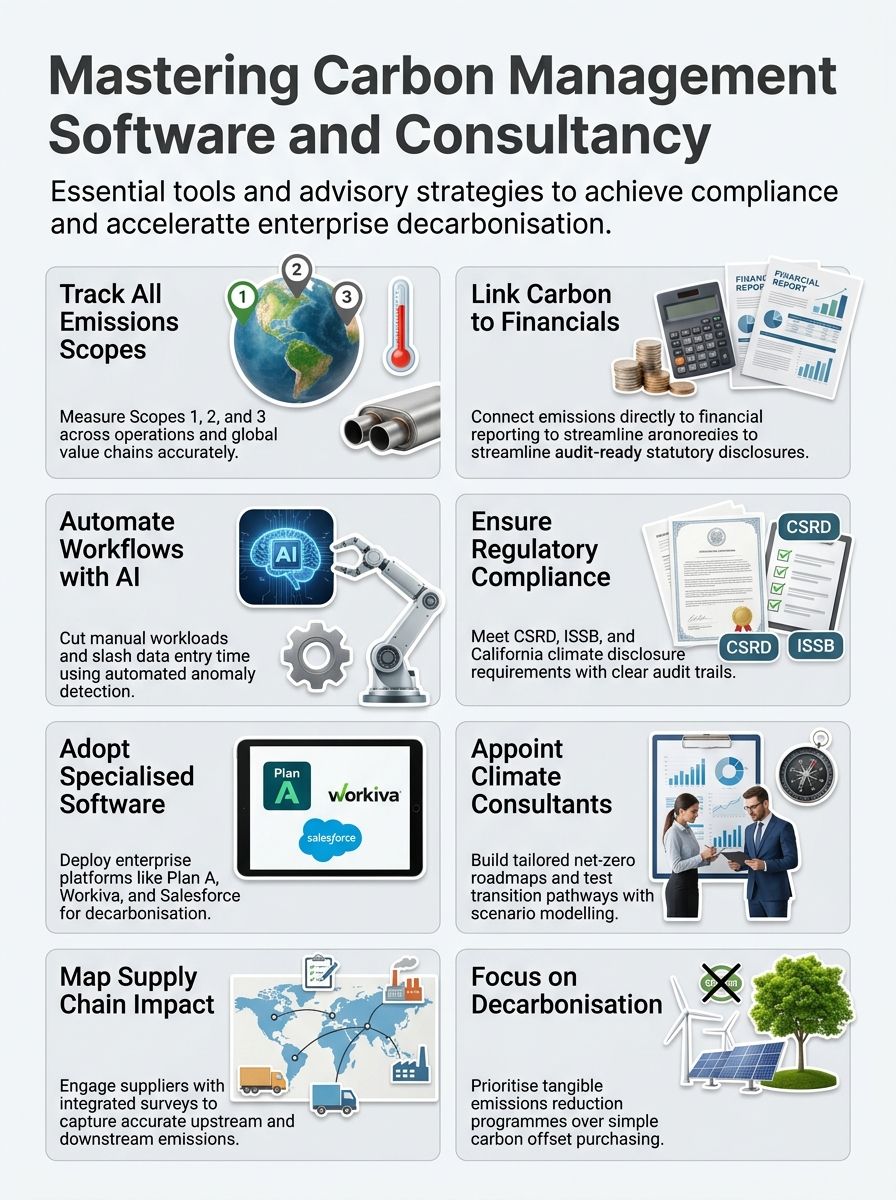
Key Features of Carbon Management Software
Effective carbon management software does more than total up emissions. It creates a dependable chain from operational activity, such as fuel use, electricity consumption and purchase orders, through to calculations, approvals, reduction plans and sustainability reporting.
For US teams, start with the data you already control. General-ledger exports, utility accounts, travel systems, fleet records and procurement data usually provide a stronger first baseline than a broad supplier survey sent before internal records are ready.
Accurate emissions tracking for Scope 1, 2 and 3
Accurate carbon accounting begins with boundaries. Scope 1 covers emissions from sources your business owns or controls, Scope 2 covers purchased electricity, steam, heat or cooling, and Scope 3 covers other indirect value-chain emissions such as purchased goods, freight and use of sold products.
That structure matters because a Corporate Carbon Footprint can quickly become unreliable when teams mix operational data with supplier estimates without recording the method used. Ask every provider to show the data source, emission factor, reporting period and calculation method beside the final number.
IBM Envizi is useful for organisations with large volumes of finance and procurement data. Its Scope 1 and 2 module uses a library of more than 40,000 managed emission factors, including US EPA and eGRID sources, while its supply-chain module can apply supplier-specific, hybrid, average-data or spend-based methods for Scope 3 calculations.
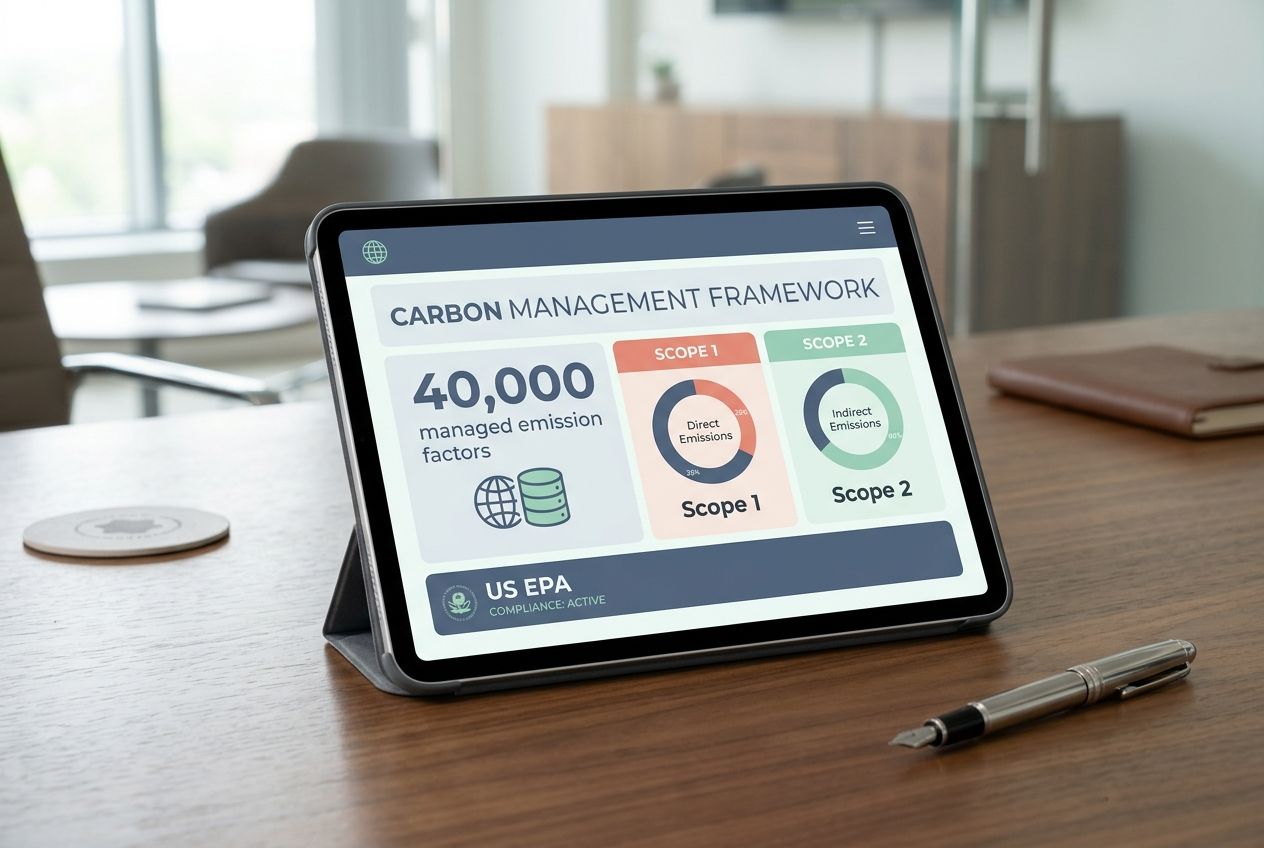
Measure emissions in a way that lets another person trace, test and explain every result.
Workiva Carbon is a strong fit where assurance and reporting control are central. It supports Scope 1, 2 and 3 accounting, supplier surveys, attached evidence, data lineage and permissions, which gives sustainability, finance and audit teams a shared record rather than separate versions of the same number.
Plan A and Cozero are better suited to teams that want carbon accounting to lead directly into emissions reduction. Plan A combines measurement with decarbonisation planning, while Cozero supports Corporate Carbon Footprint and Product Carbon Footprint work, supplier input and investment modelling.
Integration with financial data
Financial data integration is often the point where a carbon programme becomes operational. If purchasing, energy and travel data must be exported, cleaned and reloaded every month, your team will spend more time preparing files than questioning the results.
Workiva Carbon links carbon data with sustainability, finance, audit, risk and legal workflows. That is valuable for businesses that need financial reporting and sustainability reporting to use the same definitions, controls and supporting evidence.
| Integration need | Useful platform capability | Why it matters |
|---|---|---|
| Utility and facility data | Microsoft Sustainability Manager | Helps centralise carbon, water and waste data across business units. |
| ERP purchasing data | IBM Envizi Supply Chain Intelligence | Uses order-level and spend data to calculate and improve Scope 3 Category 1 and Category 2 estimates. |
| Controlled disclosures | Workiva Carbon | Connects calculations, evidence, reviews and disclosure workflows in one system. |
| Carbon investment planning | Cozero | Frames emissions reduction projects through ROI, payback and carbon-price sensitivity. |
A practical demo test is to give each vendor a sample of your chart of accounts and three months of procurement data. You should be able to see how the platform maps spend categories, flags missing fields and preserves the original evidence without relying on manual workarounds.
AI-powered analytics and automation
Artificial intelligence can reduce repetitive data work, but it should not replace review. The best use of AI is to suggest mappings, identify anomalies, surface missing inputs and help users interrogate a large dataset in plain language.
Microsoft Sustainability Manager includes Copilot capabilities that let users query sustainability data and ask questions about reporting periods, emission factors, calculation profiles and reduction goals. Use that feature to investigate a result, not to accept a calculation without checking the source data.
- Use automated ingestion for recurring utility, travel and ERP files, then set an owner for each data connection.
- Set tolerance rules to flag unusual fuel, energy or spend changes before reporting deadlines.
- Keep factor version history so your team can explain why an emissions result changed from one reporting period to the next.
- Review AI-generated mappings during the first reporting cycles, especially for new suppliers, unusual materials and mixed purchasing categories.
IBM Envizi offers rules and thresholds that flag data-quality issues at scale, while Workiva Carbon applies automated calculations and validated emissions factors across more than 240 countries and territories. These features help teams move from spreadsheet checks to a repeatable control process.
Customisable reporting and compliance tools
Reporting requirements differ by market, investor expectations and customer contracts. Your platform should let you organise the same source data for voluntary frameworks, internal management reports and regulatory disclosures without rebuilding the calculation each time.
As of August 2026, the California Air Resources Board lists August 10, 2026 as the first SB 253 reporting deadline for covered companies. SB 253 applies to US-based entities with more than $1 billion in annual revenue that do business in California, with Scope 3 reporting beginning for reporting year 2027.
Workiva Carbon supports workflows for CSRD, ISSB, CDP, GRI, SB 253 and SB 261 reporting. Sphera also supports multi-framework sustainability reporting and offers a DEKRA-verified life-cycle assessment database with more than 20,000 datasets, which can help product teams working on Product Carbon Footprint calculations.
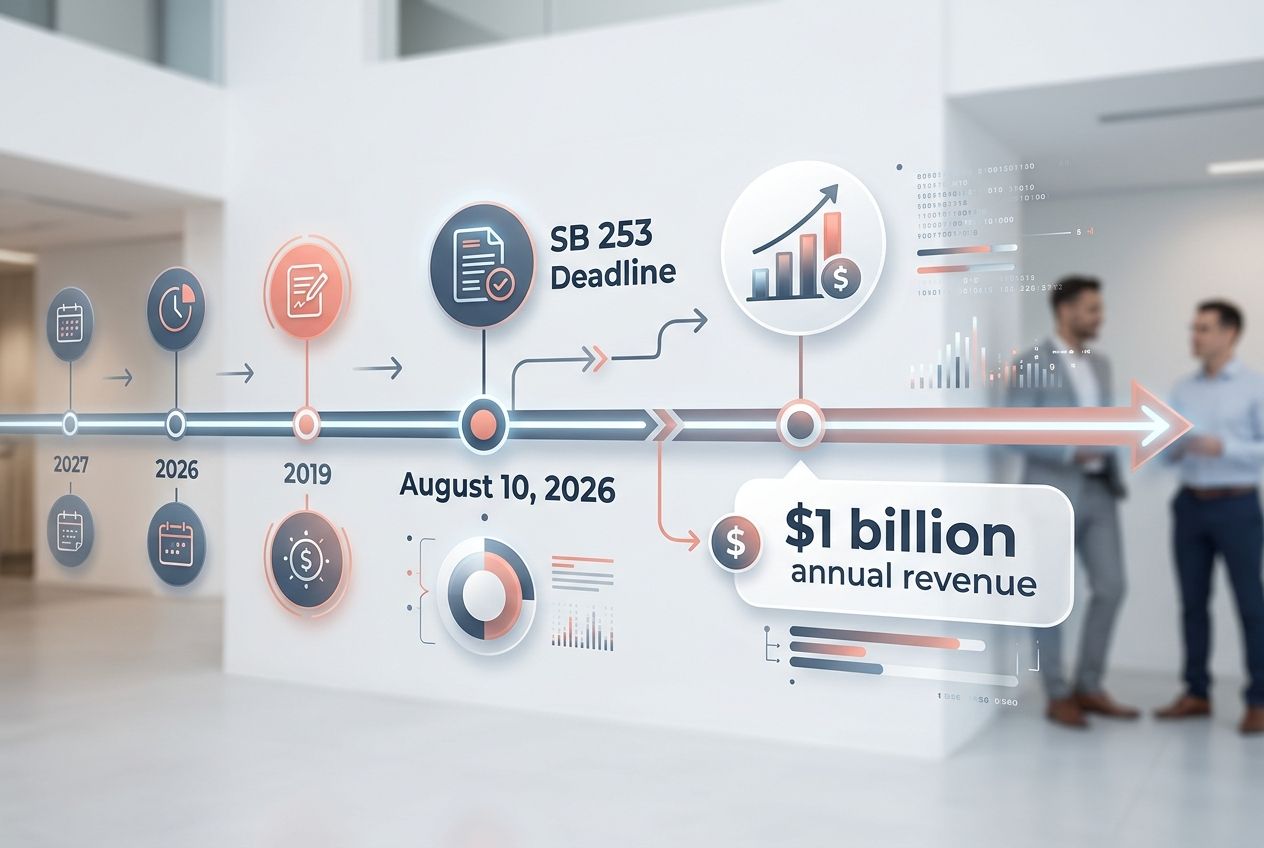
Clear data supports clear decisions, especially when your finance team, sustainability lead and external assurance provider need the same answer.
For companies with European operations, CSRD readiness may still be relevant even if headquarters are in the United States. Climate Consultants can help determine whether a parent company, subsidiary, supply-chain relationship or customer request creates a reporting need, then build the evidence process before the disclosure deadline drives rushed work.
Top Carbon Management Tools for Businesses
The right carbon management software depends on where the pressure sits. A finance-led reporting team needs control and traceability, while a procurement-led programme may need supplier-level Scope 3 data, Product Carbon Footprint exchanges and decarbonisation planning.
Plan A
Plan A is a carbon accounting and decarbonisation platform for mid-sized and larger businesses. It supports emissions measurement, reporting, science-based target planning and scenario modelling, helping teams compare reduction projects before committing capital.
Its case study with AMPECO describes a significant saving in data-entry time after implementation, although the company still used manual inputs. That is a useful reminder that software improves a process, but cannot create clean source data where none exists.
Choose Plan A if you need a clear link between carbon footprint data and emissions reduction projects. During a demo, ask to see how it handles renewable energy procurement, project ROI and changes in emission factors over time.
Microsoft Sustainability Cloud
Microsoft Sustainability Cloud, centred on Microsoft Sustainability Manager, fits organisations that already use Microsoft business systems and want to manage environmental data in a familiar data environment. It covers carbon accounting, water and waste data management, reporting and reduction goals.
The platform can connect operational records with sustainability data, while Copilot features help users search and analyse information through natural-language questions. This can speed analysis for teams that already have disciplined data owners and Microsoft-based reporting processes.
- Choose it if your business runs heavily on Microsoft systems and needs carbon, water and waste reporting in one environment.
- Confirm the connectors available for your ERP, utility-data provider, travel platform and procurement tools.
- Ask how calculation models, emission factors and approvals are versioned for audit purposes.
- Test whether business users can correct data issues without creating duplicate records.
Salesforce Net Zero Cloud
Salesforce's Net Zero Cloud is built on the Salesforce platform, making it a sensible choice for organisations that already keep supplier, customer, financial or operational records in Salesforce. It helps teams collect emissions data, track Scope 1, 2 and 3 emissions, set targets and monitor progress through dashboards.
Its main advantage is context. You can place sustainability data beside supply-chain and business data already held in your Salesforce environment, which can make climate action part of everyday account, supplier and operational management.
Use the demo to test data governance. Your team should be able to identify who owns each metric, which records feed the calculation and how an approved figure moves into sustainability reporting.
Cozero
Cozero positions its platform as carbon controlling rather than basic carbon reporting. It combines emissions collection, calculation, financial framing and disclosure support, which suits businesses that want to prioritise reduction projects through cost, payback and carbon-price analysis.
Its platform includes access to more than one million vetted emission factors and supports custom factors. Cozero also offers a PCF module that lets suppliers share product carbon footprint information directly, helping companies replace broad estimates with more granular inputs.
Scope 3 can account for up to 90% of an enterprise carbon footprint, according to Cozero. Treat that figure as a prompt to investigate your own value chain, rather than an assumption that applies to every business.
Workiva Carbon
Workiva Carbon is best for organisations where carbon accounting, financial reporting, governance and assurance need to work together. It centralises Scope 1, 2 and 3 emissions data, supports science-based targets and reduction pathways, and lets teams attach evidence to the metrics used in disclosures.
The platform is particularly strong for audit readiness because it maintains data lineage, version history and granular access controls. That helps finance and sustainability teams show what changed, who approved it and which supporting document sits behind the reported number.
| Choose Workiva Carbon if you need | What to validate in a demo |
|---|---|
| Integrated financial reporting and sustainability reporting | How carbon figures link to disclosures, reviews and approval controls. |
| Supplier engagement for Scope 3 | How surveys, supplier evidence and follow-up tasks are managed. |
| Audit-ready governance | Data lineage, attached evidence, version history and user permissions. |
Workiva launched Carbon in 2024 after acquiring Sustain.Life. Its more than 240-country emissions-factor coverage can help multinational teams apply consistent calculation methods while retaining regional data detail.
How Climate Consultants Enhance Carbon Strategies
Software gives you a system. Climate Consultants help you decide what the system should measure, who owns each decision and how your business will use the results to cut emissions rather than simply report them.
The strongest consultant engagements leave your internal team more capable. They should document boundaries, methods, assumptions, controls and training materials, so your programme does not depend on a single adviser or annual spreadsheet exercise.
Developing decarbonisation roadmaps
A credible decarbonisation roadmap starts with a baseline, then identifies the emissions sources that are material, controllable and commercially relevant. Consultants help convert that work into a staged plan for energy, fleet, travel, purchased goods, logistics, product design and supplier engagement.
The SBTi released Corporate Net-Zero Standard Version 2.0 in June 2026, but companies planning to submit, update or renew targets during 2026 are encouraged to use Version 1.3.1 while validation for Version 2.0 prepares to open in early 2027. Your roadmap should therefore track both the current submission route and the data demands that will matter under the new standard.
- Set the organisational boundary: decide whether you use operational control, financial control or equity share, then apply that choice consistently.
- Build a source-by-source baseline: separate measured data, supplier-specific data and estimated data so you can focus improvement work.
- Prioritise reduction levers: compare emissions impact, cost, payback, operational disruption and delivery owner.
- Set dated milestones: assign actions to business units and review progress at least quarterly.
- Use offsets carefully: treat carbon credits and carbon dioxide removal as separate from the work of reducing value-chain emissions.
Platforms such as Plan A, Cozero and Salesforce's Net Zero Cloud can support scenario modelling. Consultants add value by challenging assumptions, such as whether a planned renewable energy procurement contract will genuinely change the emissions calculation or whether a supplier commitment has enough evidence behind it.
Ensuring compliance with global regulations
Compliance work becomes more manageable when you treat it as data governance. Climate Consultants can map each disclosure requirement to a named data owner, source system, calculation method, review step and evidence file.
For US businesses, SB 253 and SB 261 deserve attention where your company does business in California. California Air Resources Board materials describe SB 261 as applying to US-based entities with more than $500 million in annual revenue that do business in California, while the statutory deadline has faced enforcement-related developments that should be checked with legal counsel before filing.
CSRD and ISSB requirements create a different challenge. They ask businesses to connect emissions data with strategy, risk, governance and financial effects, so a consultant should help finance, legal, procurement and sustainability teams agree on shared definitions before the report is drafted.

Good compliance evidence is created throughout the year, not collected in a rush at the end.
Workiva Carbon, Sphera and IBM Envizi can support controlled data collection and reporting. The consultant's role is to establish the control design, test the data flow and identify where manual adjustments still need documented review.
Supporting supply chain transparency
Supplier engagement works best when you focus on the suppliers that matter most. Start with the suppliers linked to the highest spend, highest estimated emissions, strategic materials or the greatest customer and regulatory risk.
IBM Envizi Supply Chain Intelligence supports Scope 3 Category 1 purchased goods and services and Category 2 capital goods. It can ingest ERP transaction data, then prioritise supplier-specific information before using average or spend-based factors where primary data is unavailable.
Cozero takes a similar practical view through its PCF module and supplier-data workflow. Suppliers can share product carbon footprint information directly, helping procurement teams compare inputs and track whether data quality improves over time.
- Ask priority suppliers for product carbon footprint data, corporate emissions data and reduction targets.
- Use a standard request template, a clear deadline and a named procurement contact for follow-up.
- Record whether each value is supplier-specific, modelled, average-data based or spend based.
- Use supplier responses to focus joint emissions reduction work where it will have the greatest effect.
A common mistake is sending the same long survey to every supplier. Begin with a smaller priority group, explain how the data will be used and give suppliers a route to provide existing evidence such as a verified product calculation, utility data or an approved emissions inventory.
Choosing the Best Carbon Management Solution for Your Team
Choose a platform based on your operating problem, not the size of its feature list. A business preparing for assurance needs a different system from one building its first Corporate Carbon Footprint or launching a supply chain decarbonisation programme.
Use a structured demonstration process. Give every vendor the same sample data, the same reporting scenario and the same questions about implementation, controls and ongoing support.
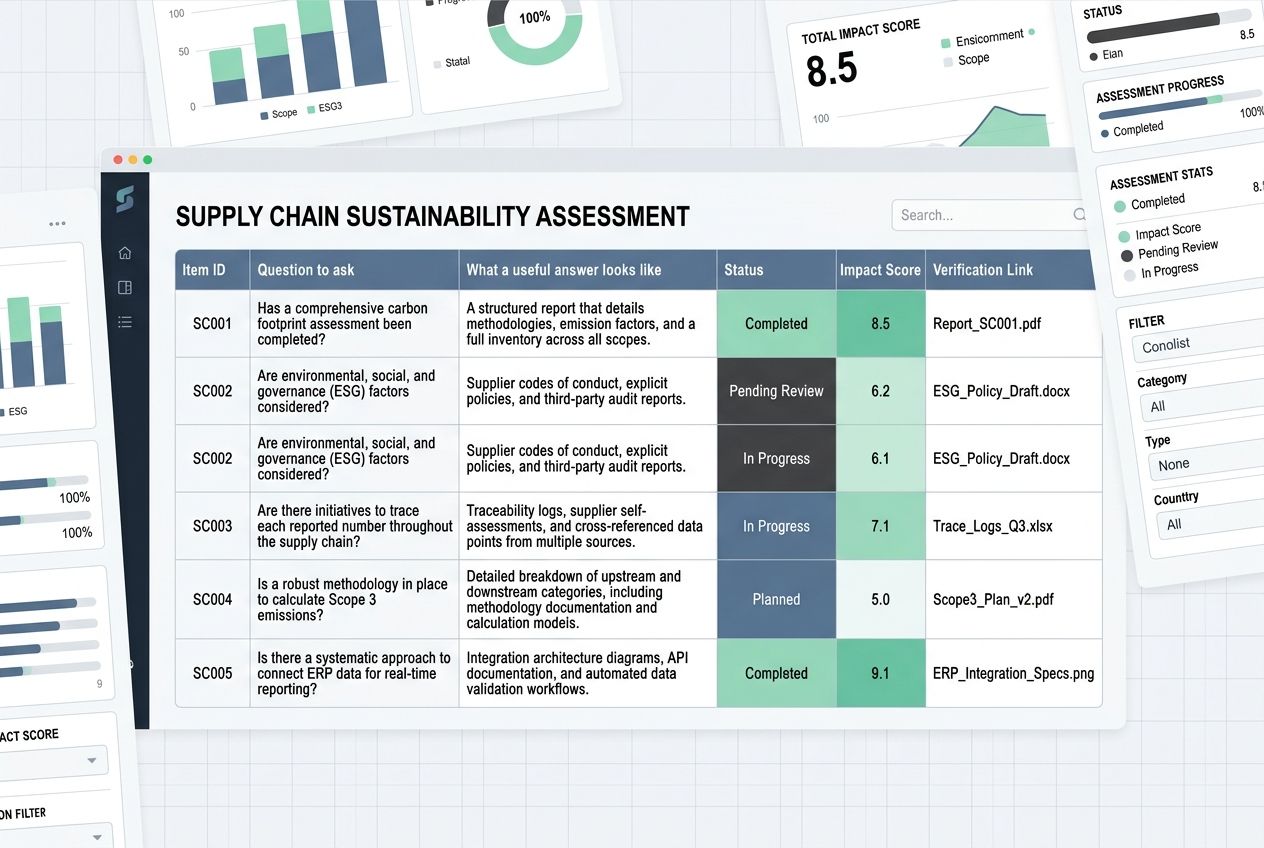
| Question to ask | What a useful answer looks like |
|---|---|
| Can we trace each reported number back to its evidence? | The vendor shows source files, mapping logic, factors, approvals and change history. |
| How do you calculate Scope 3? | The platform distinguishes supplier-specific, hybrid, average-data and spend-based methods. |
| Can we connect ERP and accounting data? | The vendor identifies tested integrations, file formats, refresh schedules and data owners. |
| How do you manage renewable energy procurement? | The system records contractual instruments, market-based calculations and supporting evidence. |
| Can we plan emissions reduction actions? | The tool links projects to owners, timing, expected reductions, costs and progress tracking. |
| What happens when source data changes? | The platform preserves version history and makes recalculations visible. |
Do not treat carbon credits as a substitute for reduction planning. Ask vendors and Climate Consultants to separate gross emissions, reductions from operational changes, renewable energy procurement effects, carbon credits and carbon dioxide removal, so leaders can see what is actually changing within the business.
Also test the human side of the rollout. In carbon accounting forums, practitioners repeatedly point out that software cannot fix disorganised internal data on its own. Assign data owners, agree a reporting calendar and provide training before you expect a platform to deliver audit-ready sustainability reporting.
Conclusion
Good carbon management software turns scattered emissions information into a controlled process for carbon accounting, financial reporting and emissions reduction. Workiva Carbon, Microsoft Sustainability Manager, Salesforce's Net Zero Cloud, Plan A, Cozero, IBM Envizi and Sphera each solve different parts of that problem.
Climate Consultants help you establish credible GHG Protocol boundaries, prepare for CSRD, ISSB and California requirements, and make supplier engagement more focused. Choose a tool that fits your data environment, then build the ownership, controls and action plan that turn carbon figures into progress.
FAQs
1. What is carbon management software and how does it help businesses and compliance teams?
Carbon management software tracks emissions, stores data and creates reports for regulatory rules. It helps businesses measure carbon, find ways to cut it and keep compliance teams ready for audits.
2. Why hire climate consultants or environmental advisers?
Climate consultants bring expert advice, set targets and speed up reporting.
3. How do I pick the best tools, like carbon management software and climate consultants, for my organisation?
Start by listing what your business needs, such as emissions accounting, data integration and standard reporting to frameworks like the GHG Protocol. Compare platforms on accuracy, ease of use, vendor support and cost, and ask for case studies or a trial. Use both software and expert advisers to cover gaps and strengthen your compliance teams.
4. Can these tools replace in-house staff, and do they need oversight?
They cannot fully replace people; software and consultants speed work and reduce routine errors. Businesses and compliance teams must still check data, interpret results and make final decisions.

Carbon Offsets vs. Carbon Credits: Key Differences Explained for Corporate Buyers
You know how quickly a climate change amelioration purchase that a company's net-zero policy requires the environmental manager to make can become confusing. In fact, it is quite common for finance, legal and sustainability teams to use the same word for different things. Carbon offsets vs carbon credits is not a simple choice between two […]

Decentralized Renewable Energy Decarbonisation Solutions & Innovations
Decentralized renewable energy (DRE) is changing the energy landscape by generating power near the point of use, enhancing efficiency and equity. This local approach empowers communities while tackling energy access and decarbonization, making it a critical solution for a sustainable future…

Maritime Decarbonization Options: Alternative Fuels Guide
Maritime decarbonisation is the strategic process of reducing greenhouse gas emissions in shipping. From LNG to biofuels, ammonia, and hydrogen, each alternative fuel offers unique benefits and challenges. Shore power, often overlooked, can significantly reduce port emissions without altering vessel fuel systems…

Energy Security Without Fossil Fuel Lock-In: Why Sustainable Bioenergy Still Matters
In times of geopolitical tension and energy market instability, governments are often tempted by what look like simple answers. More domestic fossil fuel production. More natural gas infrastructure. More emphasis on short-term supply over long-term transition. At first glance, those responses can sound practical. They promise reliability, affordability, and control. But in reality, they risk […]