You know how quickly a climate change amelioration purchase that a company's net-zero policy requires the environmental manager to make can become confusing. In fact, it is quite common for finance, legal and sustainability teams to use the same word for different things. Carbon offsets vs carbon credits is not a simple choice between two interchangeable products. The key distinction is whether you are buying a project-based reduction or removal, or meeting a rule-based obligation to hold an allowance.
For corporate buyers, that difference shapes your contract, reporting, public claims and reputational risk.
This guide separates carbon offsetting vs carbon credit purchases, explains voluntary and compliance markets in the United States, and gives you a practical due-diligence process before you commit budget.
Key Takeaways
- A carbon credit normally represents one metric tonne of carbon dioxide-equivalents, or CO2e, but the term can describe either a project credit or a regulatory allowance. Confirm the instrument before you buy.
- Carbon offsets usually refer to voluntary purchases of verified project credits that reduce or remove greenhouse gases outside your own operations.
- Compliance allowances give a regulated emitter permission to release a set amount of emissions. They are not the same as voluntary offsets, even when both are measured in tonnes.
- High-integrity voluntary carbon credits need evidence of additionality, credible measurement, protection against double counting, safeguards for affected communities and a visible retirement record.
- In the United States, the Federal Trade Commission expects companies to support carbon offset claims with competent and reliable scientific evidence and to avoid claiming credit for activities already required by law.
- As of 2026, the World Bank reports that direct carbon prices cover nearly 30% of global greenhouse gas emissions across 87 implemented policies, which makes compliance exposure a material procurement issue for some multinational buyers.
Defining Carbon Offsets and Carbon Credits
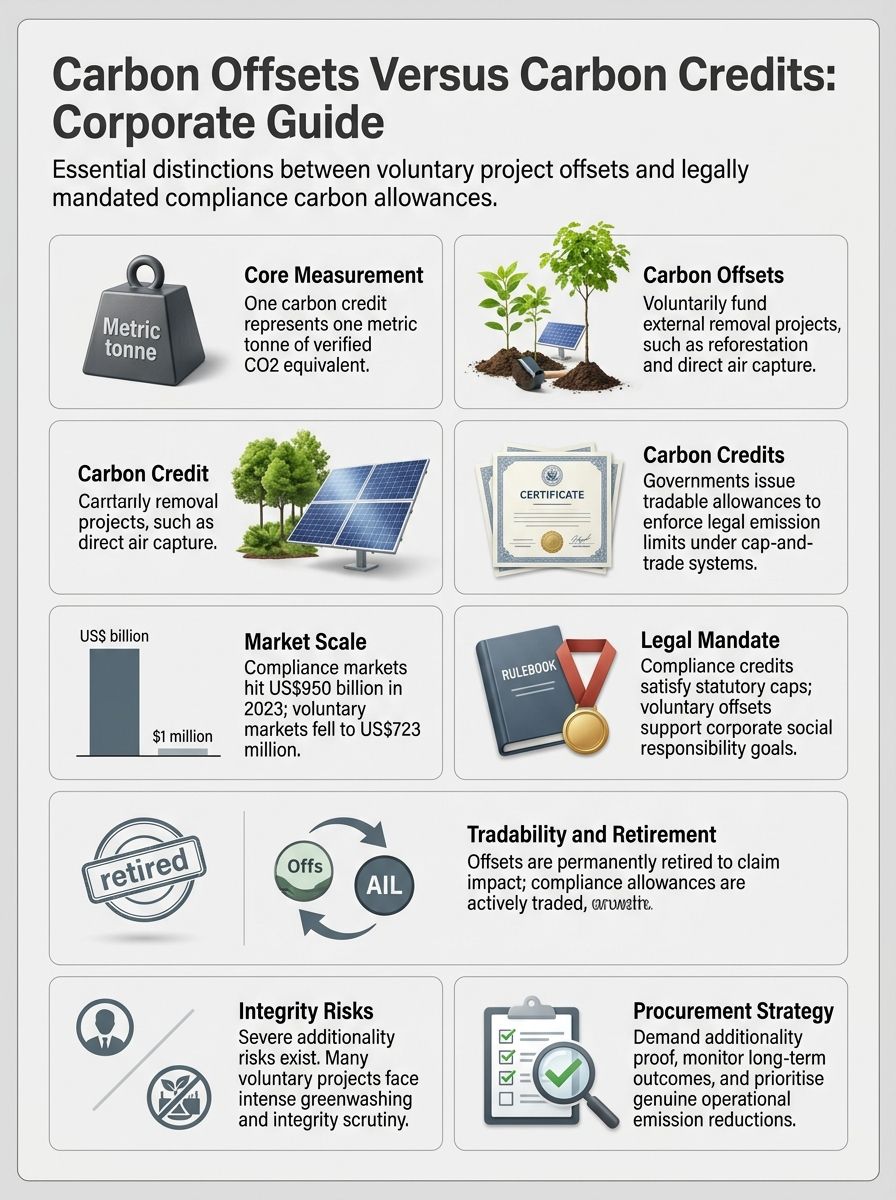
Start with the language, because it prevents costly errors later. A carbon credit is a quantified unit, usually one metric tonne of CO2e, while an offset is the use a buyer makes of a verified project credit to compensate for emissions elsewhere.
The Kyoto Protocol helped establish international crediting and trading mechanisms, but today's market includes voluntary programmes, national systems and state-level cap-and-trade schemes. In practice, a corporate buyer should ask one question first: “Does this unit represent a verified project outcome, or permission to emit under a legal cap?”
What are Carbon Offsets?
Carbon offsets fund projects that reduce, avoid or remove greenhouse gases beyond what would otherwise happen. Common project types include methane capture, landfill gas destruction, improved forest management, reforestation, biochar, direct air capture and selected energy-efficiency measures.
The crucial test is additionality. A project must show that carbon-credit revenue made the activity possible or materially changed its scale, timing or outcome. If the project would have happened anyway, buying its credits would not create an extra climate benefit.
Programmes such as Verra, Gold Standard and American Carbon Registry issue credits under defined methodologies and use registries to record issuance, transfers and retirement. Gold Standard's registry assigns unique serial numbers through the credit lifecycle, so buyers can trace a unit from issuance to retirement rather than relying on a supplier invoice alone.

Buy a carbon offset only after you can see the project documents, credit vintage, serial numbers, verification record and retirement pathway.
Quality labels can help you narrow the field, but they do not replace project-level review. The Integrity Council for the Voluntary Carbon Market assesses crediting programmes and methodologies against its Core Carbon Principles, which focus on areas such as additionality, permanence, governance and transparent tracking.
- Check the baseline: ask how the project estimates emissions without the project, then challenge assumptions that drive most of the claimed impact.
- Check permanence: forestry and land projects need a plan for fire, pests, illegal clearing and other reversal risks.
- Check local rights: request evidence of land tenure, stakeholder consultation and benefit-sharing arrangements.
- Check the retirement: require registry evidence in your company name before publishing an offset claim.
The Federal Trade Commission's Green Guides state that carbon offset claims need competent and reliable scientific evidence. They also warn against marketing a carbon offset where the underlying activity is already required by law, which is why your team should review legal additionality as well as project additionality.
What are Carbon Credits?
Carbon credits are quantified emissions units, but corporate buyers often use the phrase too broadly. In voluntary carbon markets, a credit usually comes from a verified project. In compliance markets, the unit may be an allowance, which gives the holder the legal right to emit one tonne under a capped system.
This distinction matters. A company covered by a cap-and-trade programme cannot normally meet its legal obligation by buying any voluntary carbon credit. It must surrender the specific allowances or eligible offsets recognised by that programme.
In the United States, the Regional Greenhouse Gas Initiative, known as RGGI, requires covered power plants to hold one CO2 allowance for each tonne of CO2 emitted during a control period. RGGI's sixth control period runs from 1 January 2024 to 31 December 2026, and its participating states use the CO2 Allowance Tracking System to compare reported emissions with compliance holdings.
California's programme is now called Cap-and-Invest. The California Air Resources Board lists it as a market-based programme for reducing greenhouse gas emissions, and the state extended the programme through 2045 in 2025. Buyers participating in that market need an operational compliance account before taking delivery of allowances or eligible offset credits.
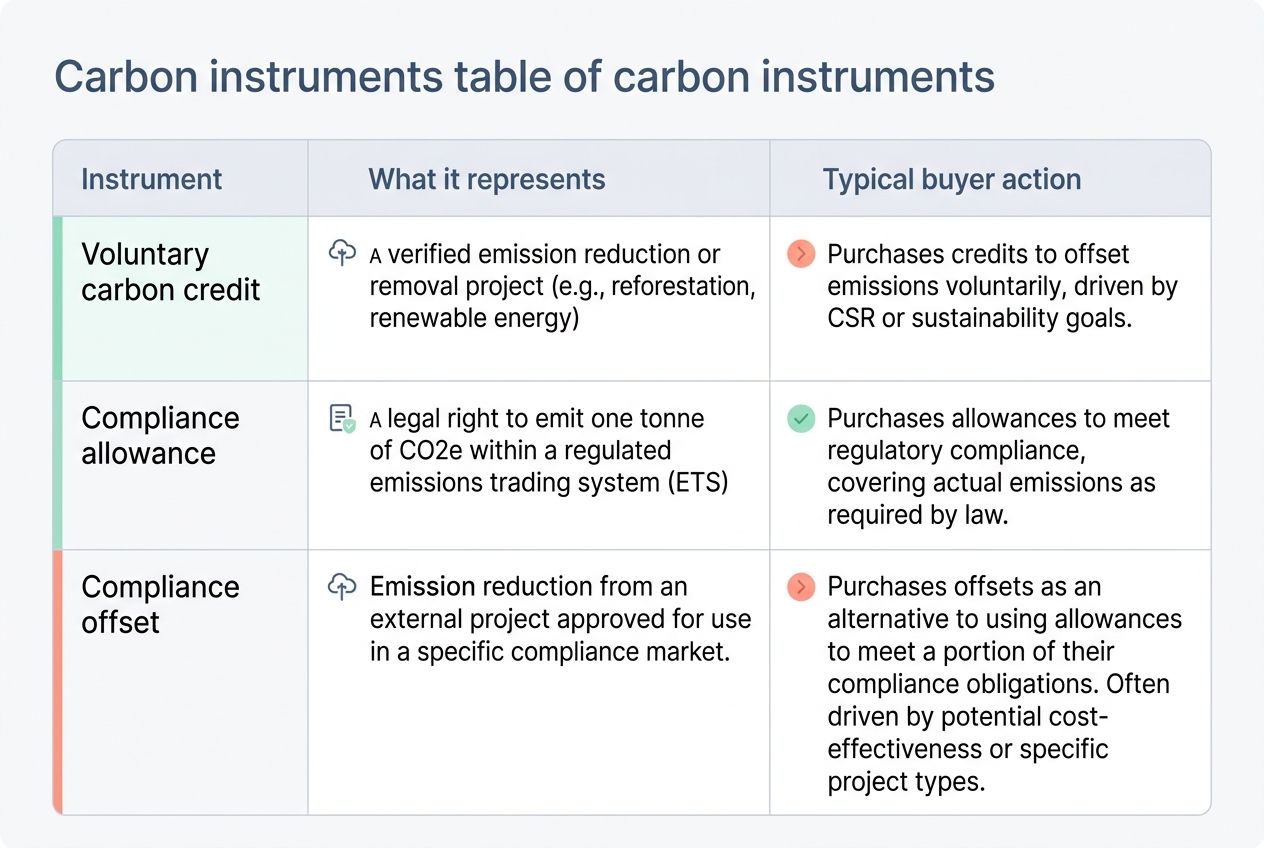
| Instrument | What it represents | Typical buyer action |
|---|---|---|
| Voluntary carbon credit | A verified reduction, avoidance or removal from a project or programme | Purchase and retire it to support a defined climate claim or contribution claim |
| Compliance allowance | Permission to emit a defined quantity under a legal cap | Hold or surrender it to meet a regulatory obligation |
| Compliance offset | A project-based credit specifically approved under a compliance scheme | Use it only within the scheme's limits and eligibility rules |
Key Differences Between Carbon Offsets and Carbon Credits
The cleanest way to compare carbon offsets vs carbon credits is to separate the unit from the claim. A credit is the unit. Offsetting is one possible use of a project credit after a buyer has measured its own carbon emissions and taken credible steps to reduce them.
That means a company may buy voluntary carbon credits without claiming that its own emissions have disappeared. It can instead describe the purchase as financing climate action, provided its wording matches the evidence and does not overstate the result.
Purpose and Functionality
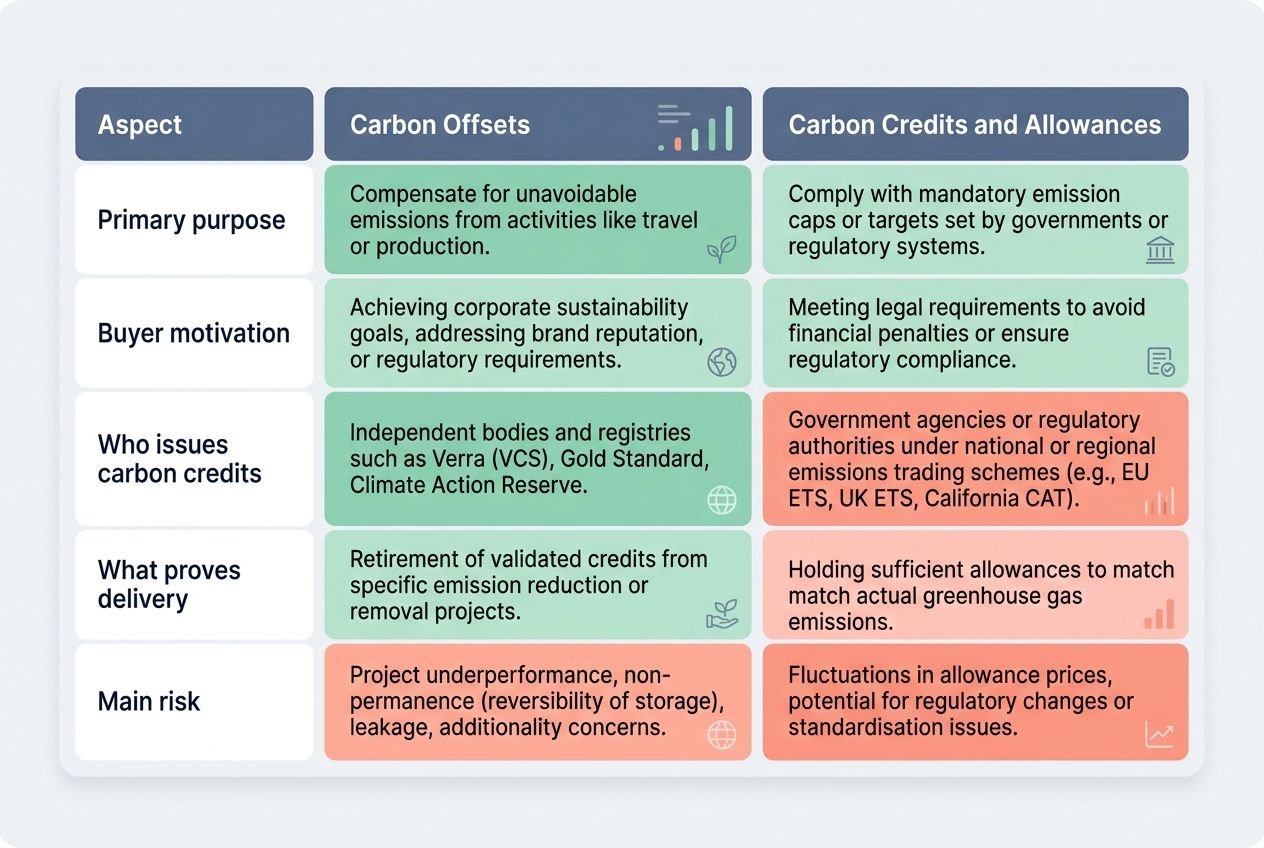
For procurement, this means you should write the required use into the request for proposal. Ask suppliers whether the product is a voluntary credit, a regulated allowance, an eligible compliance offset or a renewable energy certificate. These instruments serve different accounting and legal functions.
The United States Environmental Protection Agency distinguishes renewable energy certificates from carbon offsets: renewable energy certificates are generally used to manage purchased-electricity claims, while carbon offsets address emissions reductions outside the buyer's inventory. Do not treat one as an automatic substitute for the other.
Voluntary vs. Compliance Markets
Voluntary carbon markets allow companies, investors and individuals to buy project credits by choice. Compliance markets operate under legislation or regulation, so covered entities must obtain and surrender approved units.
Market size alone does not tell you which market fits your organisation. Compliance demand comes from legal obligations. Voluntary demand depends heavily on corporate targets, buyer confidence, project quality and the credibility of public claims.
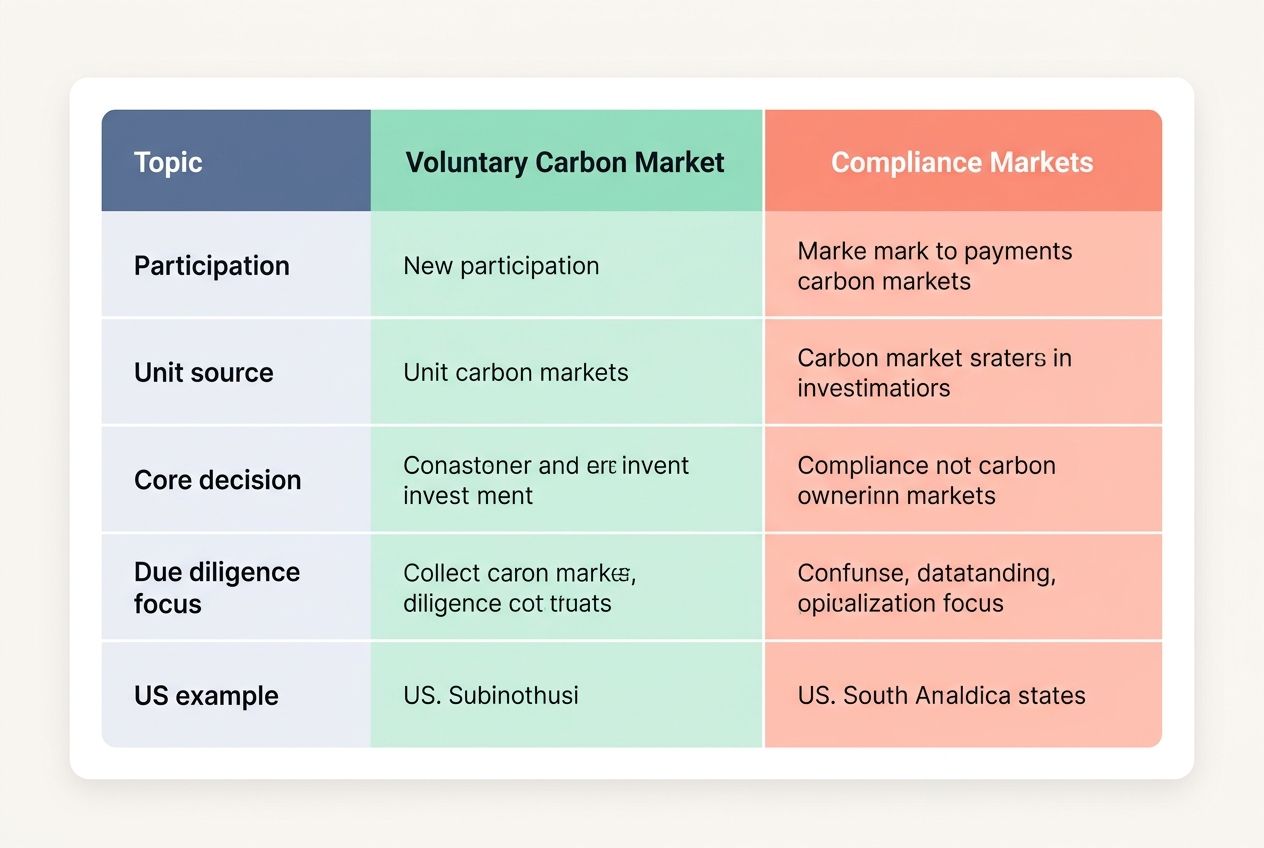
| Topic | Voluntary Carbon Market | Compliance Markets |
|---|---|---|
| Participation | Optional for companies and other buyers. | Mandatory for covered facilities or sectors. |
| Unit source | Project credits issued by carbon crediting programmes such as Verra, Gold Standard or American Carbon Registry. | Allowances issued by regulators, plus limited eligible project credits where programme rules permit them. |
| Core decision | Which project and claim can your company support credibly? | Which recognised units do you need, and by what compliance date? |
| Due diligence focus | Additionality, baseline quality, permanence, safeguards, methodology, registry and retirement. | Eligibility, account status, surrender deadlines, holding limits and price exposure. |
| US example | A company retires a project credit through a recognised registry for a voluntary climate action claim. | A covered power plant acquires RGGI allowances or California compliance instruments. |
RGGI allows regulated power plants to use qualifying offset allowances for only a limited part of their obligation. The programme currently caps that use at 3.3% of a plant's compliance obligation, so an offset purchase cannot replace the bulk of an affected facility's allowances.
For a voluntary buyer, registry visibility is the practical control point. Verra, Gold Standard and American Carbon Registry all maintain systems that track credits through transfer and retirement. Build a contract clause that requires the seller to provide the retirement certificate and the underlying serial numbers by an agreed date.
Choosing the Right Option for Corporate Buyers
Your first decision is not which supplier to use. It is whether you face a legal compliance obligation, want to finance external climate action, or need both.
If your business operates a covered facility in California, an RGGI state or another regulated jurisdiction, treat compliance allowances as a legal procurement category with treasury, legal and environmental reporting controls. Keep voluntary carbon credits in a separate approval workflow.
Build a Procurement Brief Before You Request Prices
A well-built brief stops vendors from selling different products under the same label. It also lets finance compare offers based on risk and evidence, not just the lowest price per tonne.
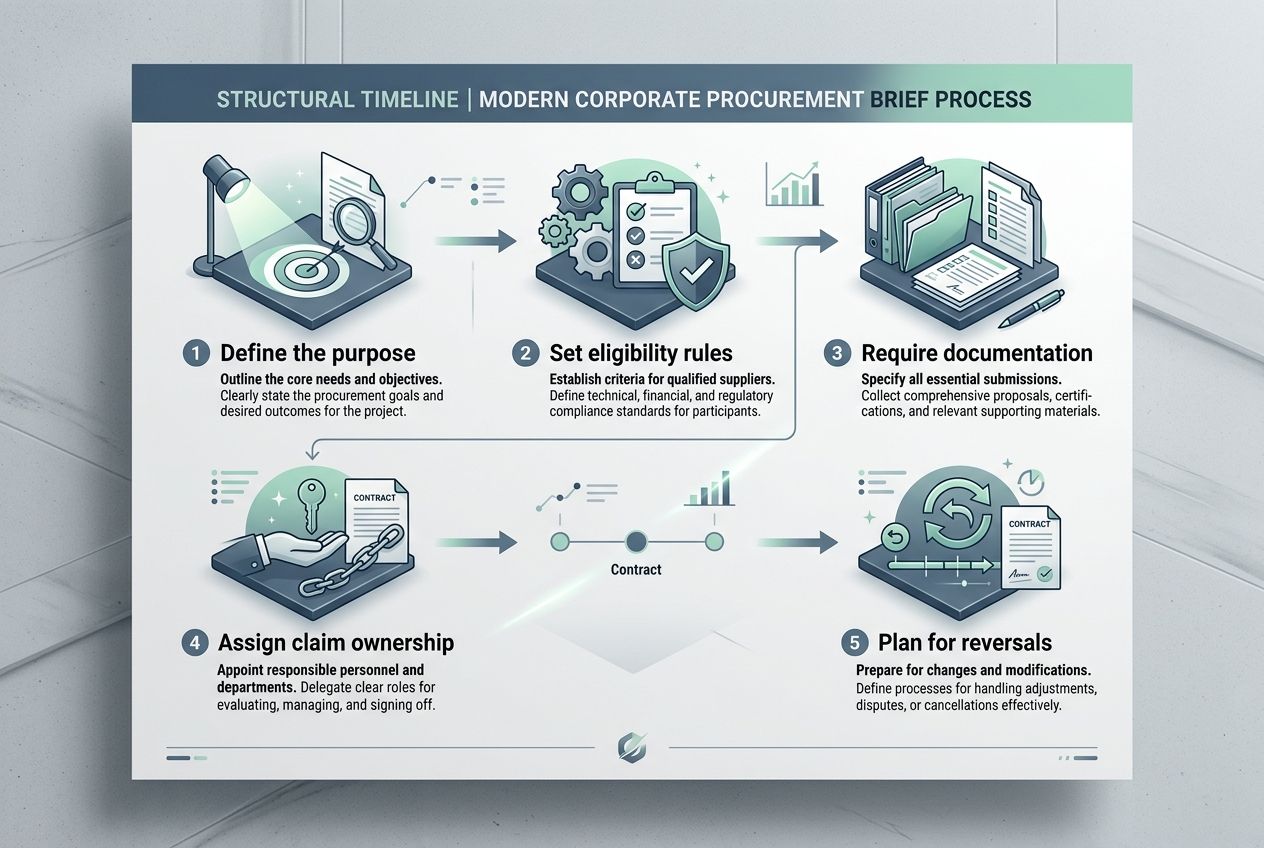
- Define the purpose: state whether the purchase supports compliance, a contribution claim, a residual-emissions strategy or an internal carbon-price programme.
- Set eligibility rules: name acceptable standards, methodologies, project types, vintages and geographies before suppliers respond.
- Require documentation: request project design documents, monitoring reports, validation and verification reports, registry links, serial numbers and retirement evidence.
- Assign claim ownership: confirm that no other party can make the same emissions claim after you retire the unit.
- Plan for reversals: ask how the programme addresses under-delivery, project failure or a finding of excess credit issuance.
Verra's quality-control guidance is a useful warning for buyers: if a review finds excess issuance, the project proponent may be required to replace credits, but Verra does not guarantee replacement for every buyer. That makes counterparty protections, replacement provisions and clear disclosure language worth negotiating before retirement.

Prioritise Reductions Before Carbon Offsetting
Carbon offsetting should sit after direct operational work, not in place of it. Energy efficiency, electrification, renewable electricity procurement, fleet planning and methane management can lower your own greenhouse gases while reducing future exposure to carbon prices.
For electricity, start with the data you control. Review utility bills, interval data where available, renewable energy certificates and contract terms before making a market-based Scope 2 claim. The EPA estimates that voluntary market revenues helped drive between 17% and 60% of non-hydropower renewable energy deployment outside state clean-energy mandates in the United States between 2014 and 2023, which shows why credible electricity procurement deserves attention alongside carbon removals.
For natural gas use, look first for avoidable demand, leaking equipment and process inefficiencies. Methane has a much stronger warming effect than carbon dioxide over shorter time frames, so leak detection and repair can deliver a more direct operational benefit than relying only on external credits.
Match Claim Language to What You Bought
Greenwashing risk often comes from a sentence, not a transaction. Avoid broad statements such as “carbon neutral” or “net zero” unless your inventory boundary, emissions reductions, credit use and evidence all support that claim.
Use precise language that describes the action. For example, you may say that your company retired a specified volume of verified carbon credits from a named project type for a stated reporting period. If you claim compensation for emissions, explain the emissions boundary and keep the retirement evidence available for review.

A credible climate claim tells readers what you reduced directly, what you financed externally and what remains to be done.
For US-facing communications, the Federal Trade Commission advises businesses to qualify environmental claims clearly and specifically. This is a practical reason to involve legal and communications teams before publishing a sustainability report, product claim or investor statement.
Conclusion
Carbon offsets vs carbon credits comes down to purpose, eligibility and proof. Use voluntary carbon credits to finance verified climate action after you have prioritised reductions in your own carbon footprint, and use compliance allowances only where the relevant programme requires or accepts them.
Before you buy, confirm who issues carbon credits, review the methodology and project evidence, verify registry serial numbers and secure retirement records. Clear procurement controls and honest reporting will do more for your sustainability strategy than a low-cost credit with a vague claim.
FAQs
1. What is the difference between carbon offsetting vs carbon credits?
Carbon credits are permits you can buy or sell that link to a set limit on carbon emissions. Carbon offsetting pays for projects that lower or avoid emissions elsewhere, and it is not the same as cutting your own emissions.
2. What is the difference in carbon trading vs carbon offsetting?
Carbon trading sets a cap and creates tradable credits within a market, while carbon offsetting funds specific projects that reduce carbon emissions.
3. Do companies need to care about gwps, hydrofluorocarbons, hfcs?
Yes, gwps show how much heat a gas traps, and hydrofluorocarbons, often called hfcs, have high gwps. Firms should care because these gases can raise reported carbon emissions, and cutting them gives real climate benefit. Check suppliers and avoid equipment that leaks hfcs where you can.
4. Can carbon credits fund electric vehicles?
Yes, some schemes allow credits to fund electric vehicles, but the project must prove it gives extra cuts and avoid double counting. Buyers should verify the standard, and prefer credits with clear rules and strong monitoring.

Carbon Management Software & Climate Consultants: Best Tools for Businesses & Compliance Teams
You know how carbon data can look manageable in a spreadsheet until finance, procurement and legal each need a different answer from it? That is where carbon management software earns its place, turning scattered utility bills, purchasing records and supplier data into a controlled process for carbon accounting, sustainability reporting and decarbonisation. The key distinction […]

Decentralized Renewable Energy Decarbonisation Solutions & Innovations
Decentralized renewable energy (DRE) is changing the energy landscape by generating power near the point of use, enhancing efficiency and equity. This local approach empowers communities while tackling energy access and decarbonization, making it a critical solution for a sustainable future…

Climate Change Risk Management Strategies & Solutions
Climate change risk management is essential now. Combining mitigation, adaptation, geoengineering, and expanding knowledge offers the best approach. Effective partnerships between scientists and field specialists drive real-world climate solutions. Discover strategies to reduce vulnerability across forests, water systems, and wildlife habitats for a sustainable future…

Energy Security Without Fossil Fuel Lock-In: Why Sustainable Bioenergy Still Matters
In times of geopolitical tension and energy market instability, governments are often tempted by what look like simple answers. More domestic fossil fuel production. More natural gas infrastructure. More emphasis on short-term supply over long-term transition. At first glance, those responses can sound practical. They promise reliability, affordability, and control. But in reality, they risk […]