We are pleased to support the World Biogas Association by posting their latest council member details below.
– PR STARTS: 21 December 2021 –
World Biogas Association Announces New Council members
 The World Biogas Association (WBA) has announced the election this month of eight new members to join its Council, as follows:
Dr Atma Ram Shukla, President, Indian Biogas Association, India
Prof Frederic Coulon, Cranfield University, UK
Kunal Shah, Managing Director Asia, Anaergia, Singapore
Mariela Pino D, Team Coordinator, RedBioLAC, Latin America and Caribbean
Olivier Guerrini, Vice President Biogas, TotalEnergies, France
Pierre-Emmanuel Meyers, Energy Transition Director, Air Liquide, France
Robert Dysiewicz, Global Innovation Leader – Future Energy, GHD, Canada
Suad Said Al-Hosni, Strategic Development Department, Be’ah, Oman
These appointments – for a term of three years – will help ensure that the WBA Council is as representative of the global biogas industry as possible. The new Council members will join the cohort elected for the term May 2020 to May 2023, which consists of:
Alberto Borello, South African Biogas Industry Association (SABIA), South Africa
Alex Marshall, Group Business Development and Marketing Director, Clarke Energy, UK
Chris Maloney, Chief Executive Officer, Entsorga Inc, USA
Francois Huberts, Global Sales & Marketing Director, DMT Environmental Technology, The Netherlands
Gabriel Cadoux, Process Engineer, SUEZ International, France
Marta Kamola-Martines, Head of Biogas, Corporate Strategy, ENGIE, France
Ole Hvelplund, CEO, Nature Energy, Denmark
“We congratulate and warmly welcome the newly elected WBA Council members”, commented Charlotte Morton, WBA Chief Executive. “The additional intelligence, experience and knowledge they bring will greatly support the work of WBA.
The key role of the Council is to provide strategic direction to the WBA’s activities and in particular to identify and provide guidance on how to overcome the barriers to delivering the global growth of our sector – which is crucial as a key player in the fight against climate change (1).
There is a lot to do to facilitate the biogas industry delivering 50% of the Global Methane Pledge by 2030 and the sector will greatly benefit from having such an expert and representative group of people sitting around the WBA Council table. We look forward to working with them all in 2022”, she concluded.
(1) By capturing and recycling the 105bn tonnes of organic wastes produced by human activity every year through anaerobic digestion, the technology which is widely recognised as extracting the most value from such wastes, the biogas industry could reduce global greenhouse gas emissions by over 10% annually by 2030, contributing to 50% of the Global Methane Pledge.
– PR ENDS –
More About this Organisation
The WBA, an international trade organisation for biogas, landfill gas and anaerobic digestion (AD), was launched at COP22 in Marrakesh in 2016.
It is devoted to promoting the recycling of all organic wastes through biogas worldwide.
Global biogas adoption is a multi-faceted potential to create renewable energy, bioCO2 and natural fertilisers while tackling global challenges of development, public health, and economic prosperity. www.worldbiogasassociation.org
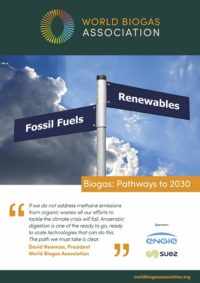
The World Biogas Association (WBA) report Biogas: Pathways to 2030, published in 2021, makes clear recommendations on how to deploy AD around the world.
It provides governments with a toolkit of measures that will enable the biogas industry to deliver carbon savings and reduce the current shortfall identified by the United Nations in the capacity of Nationally Determined Contributions (NDCs) to meet Paris Agreement targets by more than a quarter, according to the report.
Carbon Offsets vs. Carbon Credits: Key Differences Explained for Corporate Buyers
You know how quickly a climate change amelioration purchase that a company's net-zero policy requires the environmental manager to make can become confusing. In fact, it is quite common for finance, legal and sustainability teams to use the same word for different things. Carbon offsets vs carbon credits is not a simple choice between two […]
Decentralized Renewable Energy Decarbonisation Solutions & Innovations
Decentralized renewable energy (DRE) is changing the energy landscape by generating power near the point of use, enhancing efficiency and equity. This local approach empowers communities while tackling energy access and decarbonization, making it a critical solution for a sustainable future…
Climate Change Risk Management Strategies & Solutions
Climate change risk management is essential now. Combining mitigation, adaptation, geoengineering, and expanding knowledge offers the best approach. Effective partnerships between scientists and field specialists drive real-world climate solutions. Discover strategies to reduce vulnerability across forests, water systems, and wildlife habitats for a sustainable future…

The Future of Sustainable Bio-based Materials and Products
Bio-based materials are products and materials made from renewable biological resources like plants, animals, and microorganisms. They are a sustainable alternative to traditional fossil-fuel-based products, offering advantages such as a smaller carbon footprint and reduced reliance on finite resources. Common examples include timber, hemp, and bio-based plastics like polylactic acid (PLA), and they are used […]